The commonest situation on a kite trip: two weeks booked, four days of wind. Here is what to do with the other ten.
1. SUP — the simplest answer
Barrier to entry: an hour. Almost everyone stands up on the first attempt.
What you need: a board from
99 € and a paddle. Or a local rental.Why it works in a calm: SUP is the one discipline a calm helps rather than hinders. Flat water is ideal.
What you can do: cruise the shoreline, cover distance, do yoga on the board, paddle with a child or a dog, fish.
Advice: take the widest board available. More in our SUP size guide.
2. Surfing — if there is swell
An important point: a calm and an absence of waves are not the same thing. Swell travels from far out in the ocean and arrives in dead-still air. In fact a calm often produces the best waves: wind destroys them.
Barrier to entry: a first lesson gets you standing in whitewater. Confident surfing takes months.
What you need: a softboard from
416 € and a leash. Why a softboard specifically.Who for: anyone whose spot gets surf.
3. Foiling — the most underrated answer
Worth being precise here, because people confuse things.
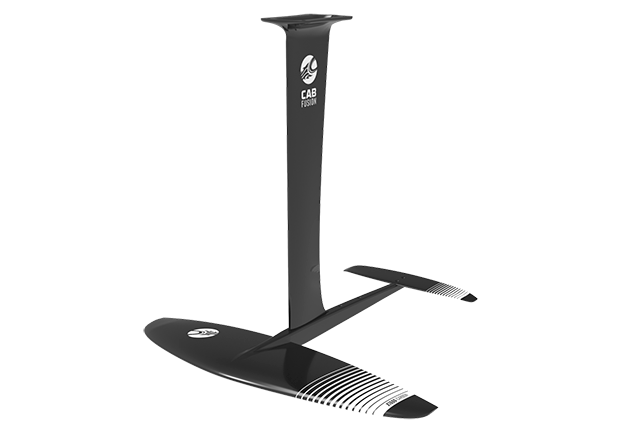
A foil goes from 10 to 12 knots where a twintip needs 15 and up. So in the "light wind" you consider a calm, a foiler is riding.
Barrier to entry: a few lessons if you already kite or wing.
What you need: a foil for the kite you own, from
424 €, plus a board.Honestly: a foil does not save you in a dead calm. But it turns half your "unrideable" days into rideable ones — and on a kite trip that changes everything. The discipline comparison is here.
4. Pump foiling — the only thing that works in a dead calm
Pumping means moving on a foil by rocking your body. No wind, no waves, no motor: just you.
Barrier to entry: high. You need confident foiling, and you start from a pontoon or a tow.
What you need: a pump board from
359 €, a high-aspect foil, a stiff mast.Who it genuinely suits: riders already flying who live by water. As a holiday activity from scratch, no.
But there is a side benefit that matters more: pumping skill saves you in winging and prone when the wave runs out or the gust dies. Worth learning regardless of calms — covered here.
5. Electric assist and boats
Electric assist: a mast motor accelerates you to takeoff, then you fly on your own. From
3 901 € for a base kit — the guide.Towing behind a boat: if your base has one, it is the best way to learn foiling — the thrust is smooth and repeatable. In detail.
Neither is about saving money but about access: they provide water time where no conditions exist at all.
Bonus: surfskating — when there is no water at all
Not water, but relevant.
A surfskate reproduces the body movement of a wave turn, and the skill transfers. Twenty minutes on tarmac a day maintains form better than nothing.
What you need: a surfskate and a helmet. How to train.
Matching this to your situation
Calm, flat water, with family → SUP.
Calm but with surf → surfing on a softboard.
10 to 14 knots, twintip will not go → a foil.
Dead calm, already flying → pumping.
A boat or cable available → tow foiling.
No water nearby at all → a surfskate.
The practical conclusion for a trip
Pack what extends your range downward rather than upward.
The classic mistake: carrying three kites — 7, 9 and 12 — and discovering every day was 11 knots.
What works better: one big kite, a foil and, if space allows, an inflatable SUP. That set covers from 10 knots down to a calm rather than from 18 to 30.
And a second thought: local rental is almost always cheaper than excess baggage for a third kite. Find out what the spot has before packing.
Common questions
What can I do on a kite trip without wind?
SUP on flat water, surfing if there is swell, foiling at 10 to 14 knots, pumping in a dead calm, towing behind a boat.
Are there really waves in a calm?
Yes, swell travels from far out. In fact a calm often produces the best waves: wind destroys them.
From what wind does a foil work?
From 10 to 12 knots against 15 and up for a twintip. It turns half your unrideable days into rideable ones.
Can I learn pumping on holiday?
From scratch, no: you need confident foiling. But it is worth learning, since it saves you in winging and prone.
What should I pack instead of a third kite?
A foil and, if space allows, an inflatable SUP: they extend the range downward, while a third kite extends it upward.
What to read next
Where to start in foiling, choosing a spot, and lessons in Mui Ne.
Try before you buy
Rent at the K1 station in Mui Ne and ride the model before buying. Our instructors match the size to your weight and wind.
Read next
Two adults, a child, two weeks on the coast. What you genuinely need, in what order to buy it, and where econo…
Aquatone Brand Review: SUP from 179 Euros, Kayaks and Everything for Days on the Water59 items: boards, kayaks, platforms, vests and apparel. A brand built around recreation rather than sport — an…
Aquatone Kayaks and Platforms: When a SUP Is Not the Only OptionInflatable kayaks for one, two or three, a SUP-kayak hybrid, and floating platforms up to twenty feet. A branc…