A foil is a wing under the board that lifts you above the water. From there the differences begin: what pulls you and what you hold. Two paths.
The essential difference
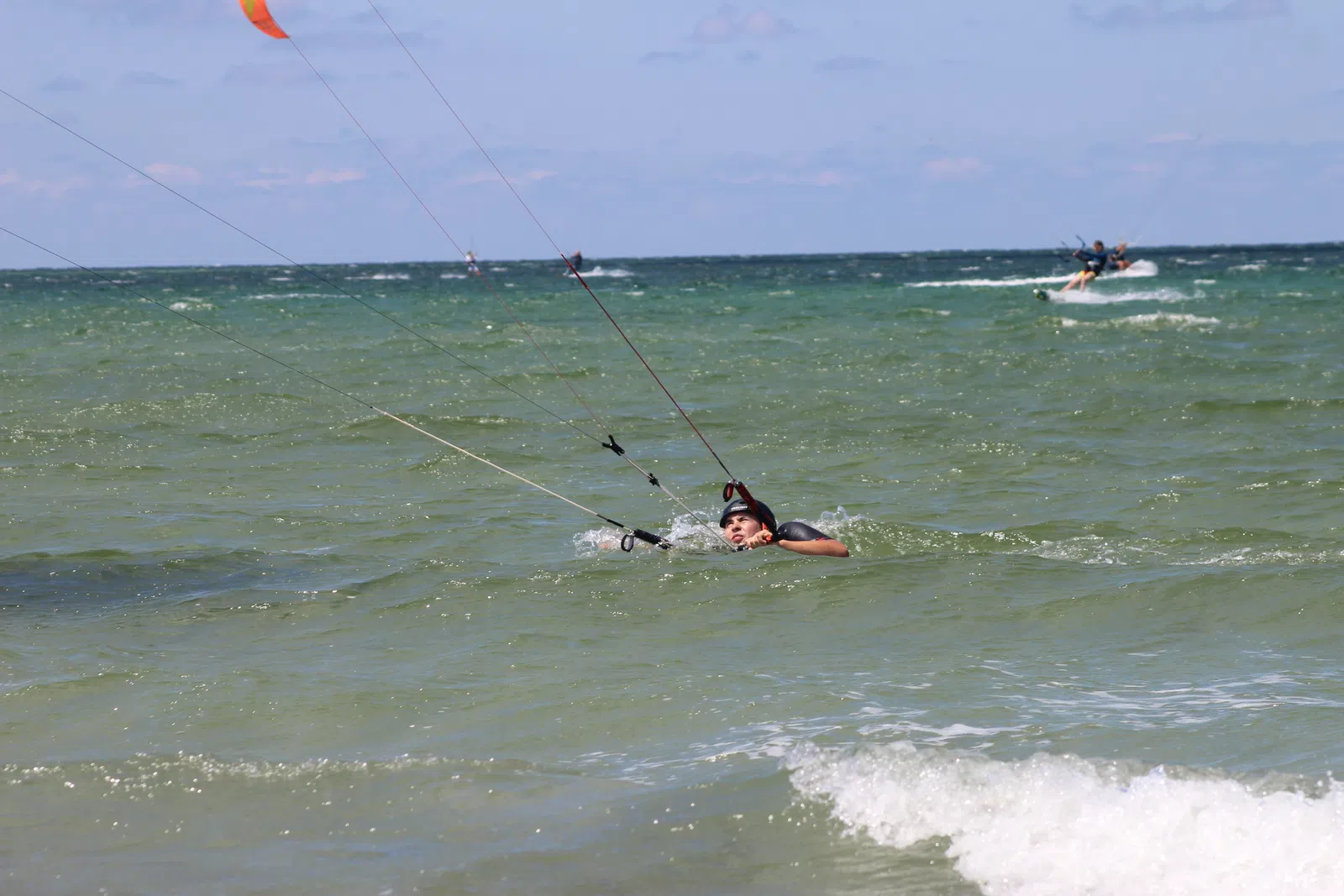
Kite foiling: a kite on lines pulls you while you stand on a foil board. You steer with a bar, as in normal kiting.
Wing foiling: you hold an inflatable wing in your hands with a foil board underfoot. No lines, no bar — just the wing and the wind.
The main practical consequence: in kite foiling the pull goes through the harness, that is through your body via a hook. In wing foiling it is held by your arms and core.
Everything else follows from that — from spot requirements to whether you tire after forty minutes.
What you need before starting
The point where people most often choose wrong.
Kite foiling requires confident kiting. You must handle the kite without thinking, water start and go upwind. A foil adds an unstable board, and an unstable board plus an unlearned kite is not tuition but free rodeo.
Wing foiling can be started from zero. That is its main advantage: a wing is simpler than a kite — no lines, no wind window, no launch or landing. Drop it and it just lies on the water.
Conclusion: if you already kite, a foil is a logical extension. If you are starting from zero and want to fly, the wing is the shorter route.
Spot requirements
Kite foiling needs room. A kite on twenty-metre lines plus safe distance from people. The same spot as normal kiting.
Wing foiling needs less width, because the wing is in your hands rather than twenty metres above the water. But it needs depth: a foil mast is 70 to 90 cm, and in shallows you will simply plant it in the bottom.
That applies to both: foiling is not for shallow water. When planning a session, count depth as well as wind.
Wind: both love it light
And here is foiling's main advantage over normal riding.
A foil goes where a twintip stands still. The wing generates lift at low speed, so 10 to 12 knots already works. On a twintip with a big kite you need 14 to 15.
In practice that doubles the number of rideable days at most spots. Which is why foiling appeals to people living in light-wind places — we covered kit for those conditions in our CrazyFly Cruiser LW light-wind board review.
What entry costs
Counting honestly, because there is a difference.
Kite foiling if you already have kites: only a foil and board package. At Naish that is the Kite Foil Semi Complete from
424 € in three wing areas — 650, 810 and 980 cm².Kite foiling from zero: plus a kite from
1 075 €, a bar and a harness. Substantially more.Wing foiling: wing, board and foil are three separate purchases. The breakdown is in our first wing guide.
The key point: if you already own kites, kite foiling is the cheaper entry — you add one item instead of three.
Which is physically harder
A difference rarely stated plainly.
In kite foiling the pull goes through the harness. Your arms are barely loaded — you can ride for hours, as in normal kiting.
In wing foiling the wing is held by arms and core. Early sessions end not because the wind stopped but because you did. Shoulders and forearms tire in thirty to forty minutes.
That evens out over a few weeks, but at the start bear in mind: winging demands more active involvement from the body.
Front wing areas: what the numbers mean
Front wing area is the main parameter, and the logic is the reverse of kites.
More area means earlier takeoff and lower speed. 980 cm² will lift you in light wind and forgive mistakes.
Less area means later takeoff and higher speed. 650 cm² is for riders already flying confidently.
Start big. The beginner's mistake is buying a "fast" wing and spending six months unable to take off.
Choosing in under a minute
You already kite → kite foil. Cheaper and quicker, part of the kit is already yours.
Starting from zero → wing foil. Lower barrier, shorter learning curve.
Light wind spot → either foil; both work from 10 to 12 knots.
Shallow spot → neither; you need depth for the mast.
Little space → wing: no lines and no safety zone under a kite.
Want long sessions → kite foil: the pull sits on the harness rather than your arms.
Common questions
Can I start foiling without knowing how to kite?
With a wing, yes. With a kite foil, no: an unstable board plus an unlearned kite is too much for one stage.
From what wind does a foil work?
From 10 to 12 knots against 14 to 15 on a twintip. At most spots that doubles your rideable days.
How much depth do I need?
More than the mast length, so a metre and up. Foiling is not for shallows, and that applies to both disciplines.
What wing area for a beginner?
A large one — 900 cm² and up. It lifts earlier and forgives mistakes.
Which is cheaper?
If you already have kites, the kite foil: one item to add. From zero, the wing.
Where to start
Our lessons in Mui Ne cover both. To browse: hydrofoils and wings. To read: choosing a first wing and kiting in light wind.
Try before you buy
Rent at the K1 station in Mui Ne and ride the model before buying. Our instructors match the size to your weight and wind.
Read next
AXIS offers a four-component configurator rather than a finished foil. How to choose in the right order, which…
Foil Etiquette: Why Foilers Are Unpopular and How to Fix ItA metal wing underwater is invisible, and that is the root of every conflict at a spot. The rules that formed …
Electric Assist for Foiling: A Motor You Run for Twenty SecondsFoil Drive and Assist put a compact motor on the mast to get you up to takeoff speed. How it works, what it co…