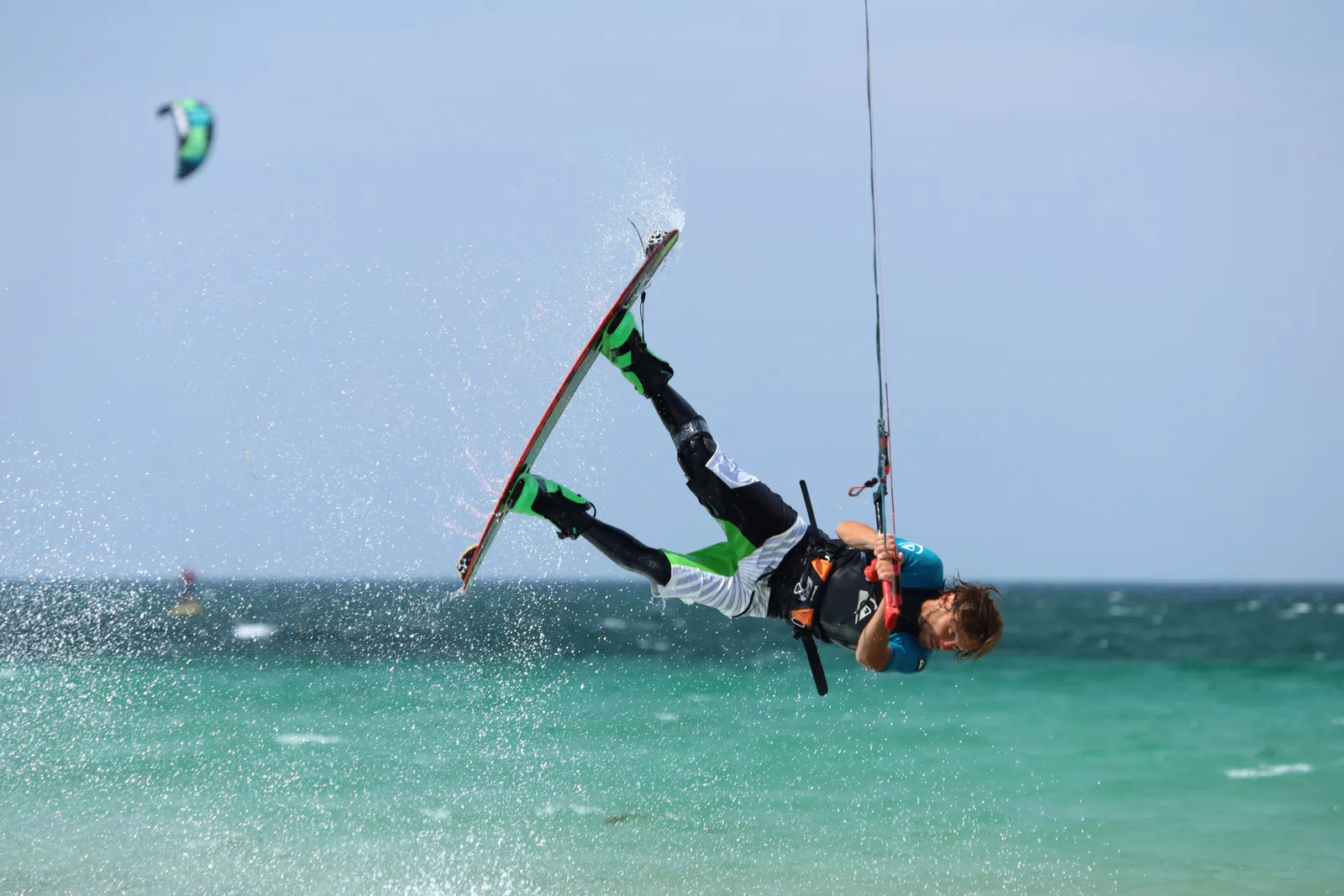
This list is not theoretical. It comes from what people most often forget, break or spend a day hunting for around the village. The order runs by how badly the missing item ruins the trip.
Without these there is no trip
- Two kite sizes. One size means you spend half the days watching the water from the beach. Pairings are in our sizing guide.
- A bar. And test the release before flying, not on the beach.
- A board. Sizing separately.
- Your own harness. A rental harness in the wrong size ruins two weeks more reliably than bad wind.
- A pump. The most forgotten item on this list, and without it an inflatable kite is fabric.
Small items that end sessions
Each costs almost nothing and each saves a day once a season.
- Spare fins and screws. Fins break on the bottom and vanish into sand.
- A repair kit: patches, glue, a piece of ripstop. A canopy tear on day one without it ends the trip.
- A spare valve and pump adaptors. A blown valve is a one-minute fix if you have the part.
- A line knife. Usually on the harness. Check it is there and still sharp.
- A length of line and spare loops. Trim can be restored if you have material.
- A multitool. Half of all breakages are fixed with a screwdriver.
Protection
- Helmet. In shallow water, not up for discussion.
- Impact vest. Covered separately.
- Wetsuit or rash vest for the season. The water table is here.
- Water shoes. Coral, rocks and sea urchins are an ordinary cause of missed days.
What almost everyone forgets
From practice, and it is the same list year after year.
High-factor sunscreen. On the water reflection doubles the dose, and burnt shoulders under a harness cost two days of riding.
A cap and sunglasses with a strap. Without a strap, sunglasses last one session.
A first-aid kit: antiseptic, plasters, something for ears. A coral scrape in the tropics heals badly and infects quickly.
A dry bag for phone and documents.
Fresh water for rinsing gear. Many stations simply have no shower for equipment.
What is cheaper to buy on site
Honestly, so you do not carry the unnecessary.
Consumables and small items. Sunscreen, rash vests, sandals, caps — any kite village has them at sensible prices.
Board rental. If you are unsure about size, renting locally beats carrying the wrong board.
A pump. Debatable: travelling as a pair, one between you. Alone, bring your own.
But harness, helmet and wetsuit are best brought from home: they fit your body, and rental versions rarely do.
Fitting it into the baggage allowance
Practical tricks that actually work.
A compression bag for kites. Two compressed kites take less room than one in its factory bag.
The bar lies alongside the board in its bag — saves space and protects the rails.
Wetsuit and vest as padding between the board and the bag walls. Two jobs at once.
Heavy things in hand luggage. Harness, bar and line knife go in the hold, but spread the pump and small items sensibly.
Weigh it at home. Excess baggage costs more than you expect, and it is charged per piece.
A note on foil kites
Travelling with foil kites is simpler: three of them fit in a backpack, and no pump is needed at all. Details in our foil versus inflatable comparison.
But add a brush or cloth for shaking sand out of the cells: sand inside the canopy is the main killer of foil kites, and we covered care separately.
Common questions
How many kites should I take?
Two sizes. One means some days without riding; three is usually excessive for two weeks.
Bring a board or rent one?
If the size definitely suits you, bring it. If you are unsure or travelling light, renting is more sensible.
What breaks most often on a trip?
Fins, valves and lines. All three are minute-long fixes with spares, and trip-enders without them.
Do I need my own pump?
Yes, if travelling alone. As a pair, one is enough.
How do I pack gear so it survives?
Board in a padded bag with a wetsuit as cushioning, bar alongside the board, kites in a compression bag. A twintip breaks in luggage more often than on the water.
What to read before you go
Our Mui Ne guide — season, wind, spots. Accessories and repair — what to buy in advance.
Try kitesurfing in Mui Ne
A trial hour with an IKO instructor is €55, all gear included. Then a course to independent riding or a December kite camp.
Read next
31 boards from 1,000 to 1,751 euros, paddles to 175, and a pump with its own spare hose. What sits behind a pr…
A SUP at 200 and at 1,400 Euros: What Differs on the WaterA sevenfold price gap between outwardly similar boards. What actually changes, point by point, and the three c…
Aquatone Kayaks and Platforms: When a SUP Is Not the Only OptionInflatable kayaks for one, two or three, a SUP-kayak hybrid, and floating platforms up to twenty feet. A branc…