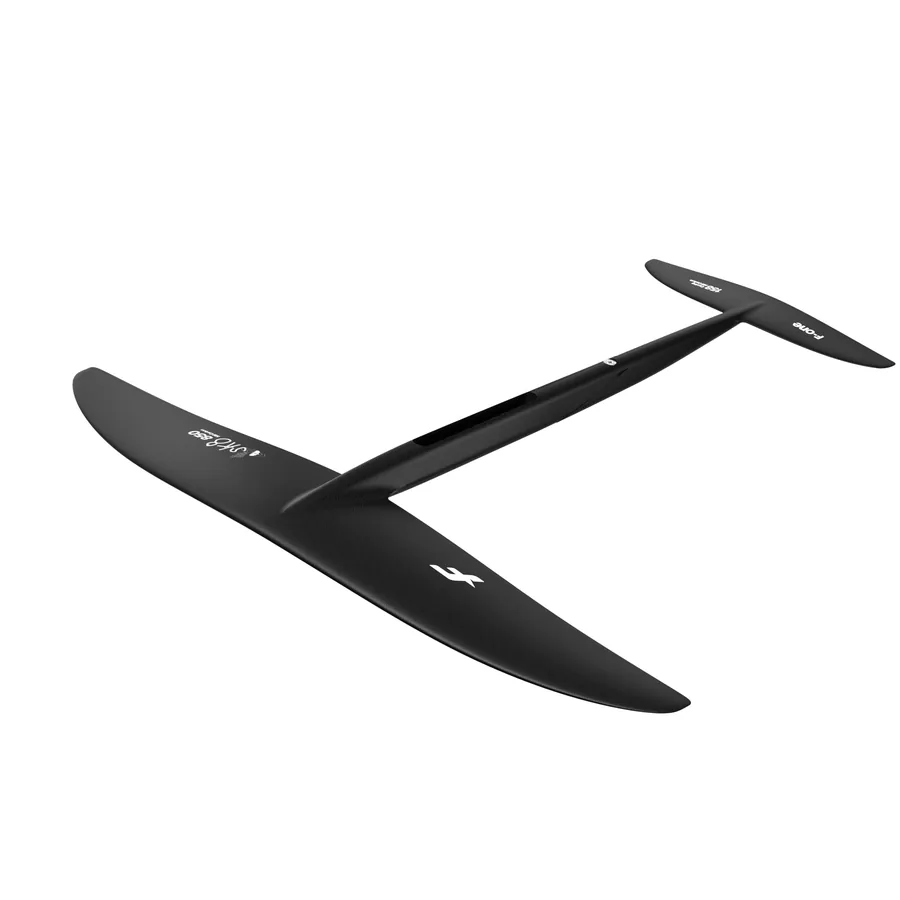
A kite can be bagged wet and forgotten for a month. A foil cannot — and the reason is chemistry rather than laziness.
The main problem: a galvanic couple
Worth understanding the mechanism, or the advice reads as superstition.
A foil bolts dissimilar metals together: an aluminium mast or fuselage, stainless or titanium bolts, sometimes brass inserts.
In salt water that works as a battery. Seawater is an electrolyte, two dissimilar metals in contact form a galvanic couple, and the less noble metal starts to dissolve.
In a foil the less noble metal is aluminium. It corrodes around the steel bolt.
What happens next: the corrosion product — aluminium oxide — occupies more volume than the original metal. The bolt seizes solid. Within a season you physically cannot dismantle the foil: the bolt will not turn and the head rounds off under the key.
This is the discipline's most common failure, and it is entirely preventable.
What to do after every session
Rinse with fresh water. Not a splash — a proper rinse, especially the wing-to-fuselage and mast-to-base joints.
Dry it. Salt water left in the threads keeps working inside the bag.
Never bag it wet. A bag traps moisture and turns into an accelerated corrosion chamber.
Riding daily? Strip it weekly. Remove the bolts, rinse the threads, grease, reassemble. Twenty minutes against a seized joint.
On thread lubrication
The step that solves the problem at its root.
Grease isolates the metals from each other and breaks the galvanic circuit.
What people use: marine anti-seize compounds, or a waterproof grease.
Apply to the bolt thread, not into the hole. A thin film — the job is isolation, not filling.
How often: at every strip-down. If the foil has not been apart for a month, it is time.
What not to do: avoid copper-based compounds against aluminium — copper only accelerates the galvanic process.
On torque
The second most common source of failure, and people err in both directions.
An under-tightened bolt lets the joint move, turning steady load into hammering, and the thread is destroyed within a few sessions. The foil also "floats" in pitch, and you blame a wrongly chosen wing.
An over-tightened bolt strips the thread in aluminium or crushes the laminate around the board's insert.
The rule: tighten to snug, not with your whole weight. Where the manufacturer states a torque figure, follow it; a torque driver costs less than one insert.
Check before every session. Not a strip-down — just feel for play by hand. Thirty seconds.
What to inspect before the season
Wing edges. A chip on a trailing edge produces vibration easily blamed on the mast. Small chips get sanded; deep ones need repair.
The mast-to-fuselage joint. The most loaded connection: it works in bending at every turn.
Board inserts. Laminate cracks around them are a signal to stop. A mast tearing an insert out at speed is an injury.
Bolts. Rounded drive sockets — replace them before you round one off completely.
The mast base. Corrosion underneath is invisible until you remove it.
Transport and storage
Wings in individual soft covers. The edges are sharp and they cut each other in a boot.
The mast separately. A carbon mast dislikes point impacts, which is exactly what happens when a board is laid on top.
Dismantled for long storage. A stripped foil will not seize over a winter.
Not in a car in summer. As with boards: a boot runs hotter than a beach, and carbon and bonded joints dislike it.
Separately on aluminium and carbon
An aluminium mast is cheaper but is exactly what creates the galvanic couple. Grease is mandatory.
A carbon mast does not corrode itself, but its inserts and bolts are metal, so the problem simply moves.
A titanium fuselage is the most resistant option, and that is part of the answer to why it costs
825 €. Mechanics in our fuselage article.Conclusion: material shifts the problem but does not remove the maintenance.
Five minutes that double a foil's life
- After a session: rinse, dry, never bag it wet.
- Before a session: feel for play by hand.
- Monthly: strip, rinse threads, grease.
- Before the season: inspect edges, inserts, bolts.
- For storage: dismantle and put away dry.
Simple arithmetic: a cheap foil treated this way outlives an expensive one bagged wet.
Common questions
Why do foil bolts seize?
A galvanic couple: aluminium and steel in salt water form a battery, aluminium corrodes, and the oxide swells inside the thread.
What should I grease threads with?
A marine anti-seize compound or waterproof grease. Copper-based compounds must not be used against aluminium.
How tight should the bolts be?
Snug, not with your full weight. Under-tightening destroys threads; over-tightening strips them and crushes board laminate.
Do I really have to rinse every session?
Yes, especially the joints. Salt in the threads keeps working while the foil sits in its bag.
Does carbon prevent corrosion?
Not entirely: the inserts and bolts are still metal, so the problem just moves.
What to read next
Try kitesurfing in Mui Ne
A trial hour with an IKO instructor is €55, all gear included. Then a course to independent riding or a December kite camp.
Read next
AXIS offers a four-component configurator rather than a finished foil. How to choose in the right order, which…
Foil Etiquette: Why Foilers Are Unpopular and How to Fix ItA metal wing underwater is invisible, and that is the root of every conflict at a spot. The rules that formed …
Where to Start in Foiling: A Two-Year RouteFive foil disciplines, and the order of learning is not arbitrary. Which to start with, how long each stage ta…