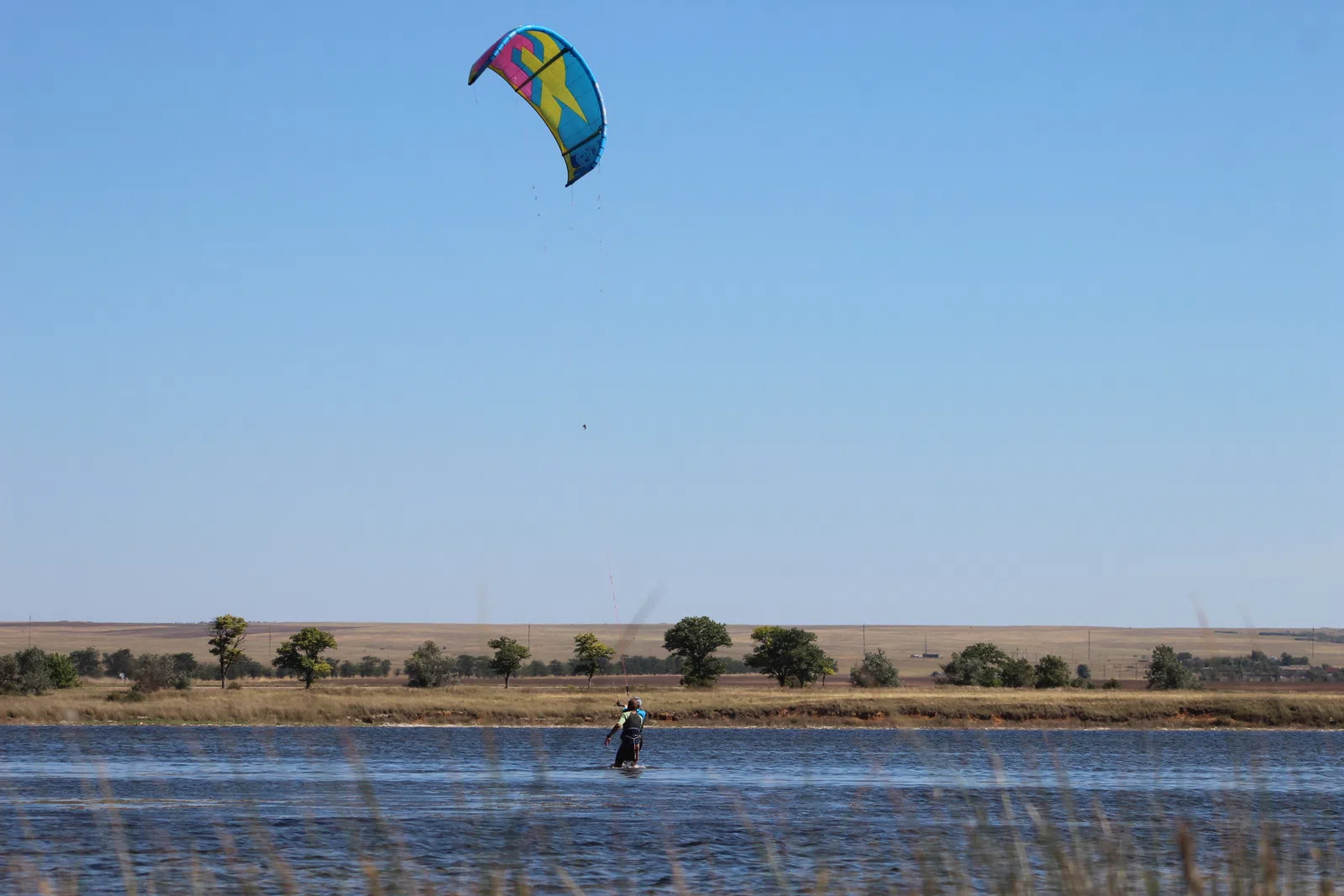
In Europe the kite season is set by temperature: there is a summer and there is a winter. In Southeast Asia it is warm all year, and the season is set by an entirely different mechanism — the monsoon. Worth understanding before you book.
What a monsoon is
A monsoon is a seasonal wind that reverses direction twice a year. The mechanism is the same as a sea breeze, only at continental scale and on a half-year cycle instead of a daily one.
In summer the Asian landmass heats faster than the ocean. Low pressure forms over it and air flows from ocean to land — the southwest monsoon.
In winter the land cools faster than the ocean, pressure over it rises, and the flow reverses — the northeast monsoon.
We covered the breeze mechanism at the scale of a single day in a separate article. This is the same thing, slower and far more powerful.
The northeast monsoon: November to April
The region's main kiting season. Steady wind, sunny days, little rain.
For Vietnam that means the following. The wind arrives from the northeast, and the east coast takes it head on — hence the Mui Ne season from November to April, peaking December to March.
A defining feature of monsoon wind: it does not gust, it blows evenly and for a long time. That is fundamentally different from European thermals, where you catch a window of a few hours. Here the wind can hold for days.
We have a detailed spot guide to Mui Ne with wind broken down by month.
The southwest monsoon: May to October
The wind reverses, brings humidity from the Indian Ocean, and most of the region enters its rainy season.
But that does not mean there is nowhere to ride. The key point of this whole article: the monsoon reverses, it does not switch off, and spots facing southwest come into their own at exactly this time.
Hence the practical rule: in Southeast Asia the kiting season runs all year — the only question is which coast you are standing on.
How it plays out by country
Vietnam. Main season November to April on the east coast. In summer the wind weakens and the rain arrives.
Thailand. Split between two coasts. The Andaman side (Phuket, west) works in the southwest monsoon; the Gulf of Thailand (Hua Hin, east) in the northeast. The country covers the whole year through geography alone.
The Philippines. The amihan season (northeast) runs November to April — the classic window for Boracay. In summer the habagat brings southwest flow and rain.
Indonesia. Closer to the equator, where monsoons are weaker. The season is less pronounced and local winds and breezes do the work.
What else changes with the wind
A monsoon brings more than wind, and that is worth planning for.
Swell. Wind direction determines where the waves come from. A spot that is flat in one season becomes a wave spot in another — sometimes a bonus, sometimes the end of teaching there.
Water temperature. Changes little; a wetsuit is unnecessary almost everywhere. A rash vest is for sun, not cold.
Prices and crowds. Peak season is also peak accommodation prices and busy water. The shoulder months are often better on every count except guaranteed wind.
Choosing your month
Guaranteed wind above all → December to March on east-facing coasts. The core of the northeast monsoon.
Cheaper and quieter → the shoulders: November and April. Fewer windy days, but wind nonetheless.
Travelling in summer with fixed dates → look at west-facing coasts: the Andaman Sea in Thailand works exactly then.
Travelling to learn → peak season. Steady, even wind is what lessons require, and shoulder-season wind is ragged.
On forecasting in the tropics
A short note, because it saves frustration.
Monsoon wind forecasts better than European thermals: it is a large-scale flow and models see it well. A three-day forecast in season usually holds.
What models miss is local acceleration at headlands and through gaps, and thunderstorm gust fronts, which in the tropics build quickly and violently. We have a separate article on storms, and it is more relevant here than anywhere.
Common questions
When is the best season in Vietnam?
November to April, peaking December to March. That is the core of the northeast monsoon on the east coast.
Can you ride in Asia in summer?
Yes, but on different coasts. The southwest monsoon works where spots face southwest.
Do I need a wetsuit?
Almost nowhere. The water is warm year-round; a rash vest is for sun rather than cold.
How steady is monsoon wind?
Markedly steadier than thermal wind: it blows evenly and for long stretches, sometimes days, rather than in windows of a few hours.
What is the biggest hazard in the region?
Thunderstorm gust fronts: in the tropics they build fast and deliver a sharp increase with a change of direction.
What to read next
Our Mui Ne guide — wind by month, spots, school. Sea breeze and thermal wind — the same mechanism on a daily scale. Our packing checklist — what to bring.
Mui Ne wind — right now
Live spot webcam and the wind sensor at the K1 station. Wind is on — book a lesson or rent gear.
Read next
Over three months we covered twenty brands and every watersport. Here are the patterns that recurred in every …
Every Watersport Discipline: A Map of Entry Barriers and BudgetsKiting, winging, windsurfing, SUP, surfing and foiling in all its forms — twelve disciplines in one map. Entry…
Aquatone Brand Review: SUP from 179 Euros, Kayaks and Everything for Days on the Water59 items: boards, kayaks, platforms, vests and apparel. A brand built around recreation rather than sport — an…