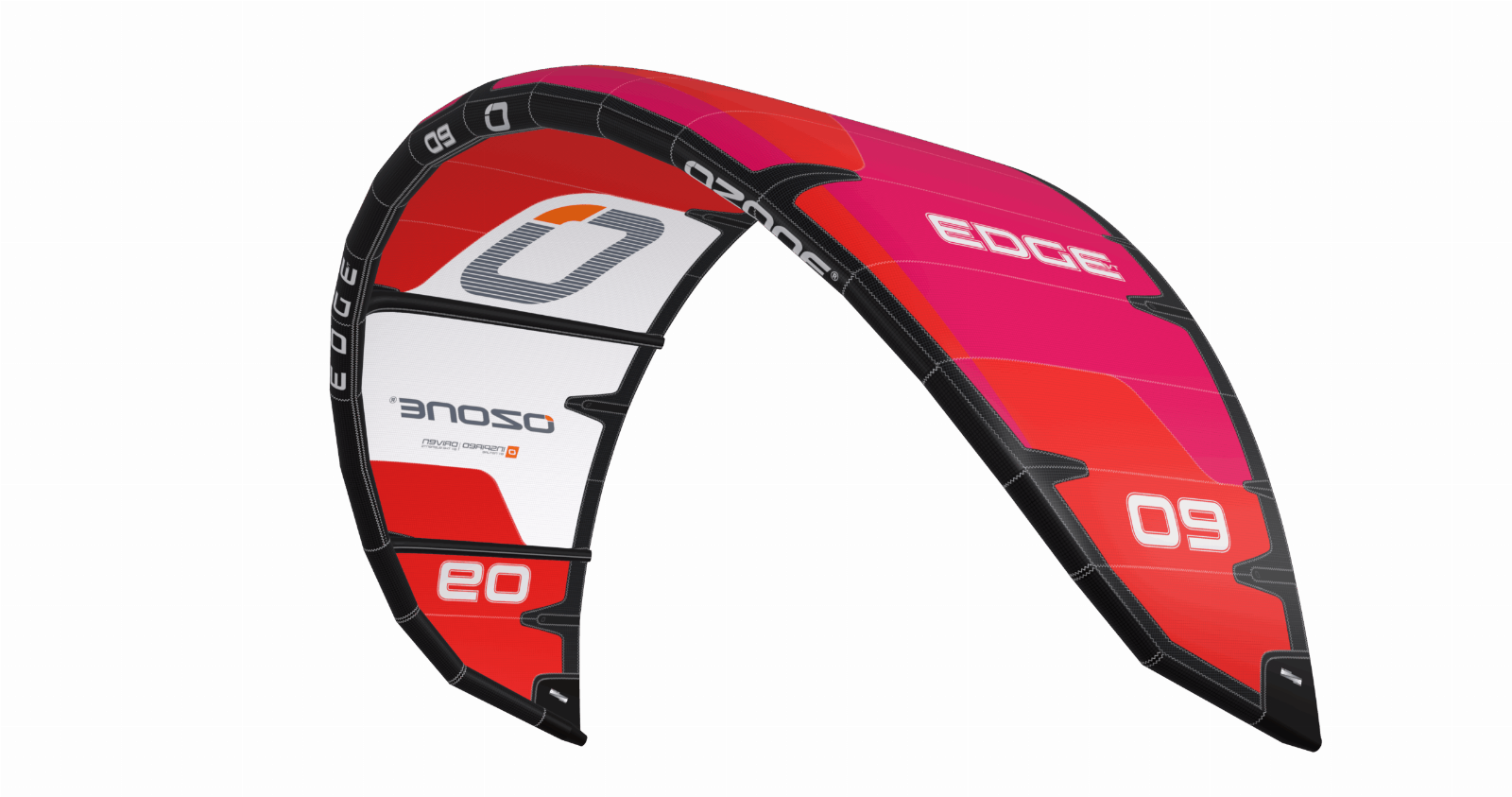
The Ozone Edge is not a kite for a first season. It is a high-aspect, five-strut performance kite built around three things: upwind ability, speed and hang time. If you want a forgiving all-rounder, Ozone makes those too — this is the other end of the range.

What the Edge is for
The high aspect ratio and flatter arc give the Edge its defining trait: it goes upwind better than almost anything else in the air. For anyone who rides long distances, does downwinders and has to get back, or races, that single property outweighs everything else.
The second consequence is hang time. A high-aspect kite generates lift through the jump and holds you up on the way down, which is why the Edge has a following among big-air riders as well as racers.
The third is speed through the window — and this is where it demands respect. The Edge moves fast and delivers power directly. That is a feature for an experienced rider and a problem for someone still learning to steer.
Ultra-X or standard
Ozone offers the Edge in standard construction and in Ultra-X, built from lighter, stronger cloth. The Ultra-X version is noticeably lighter in the air, which shows up as better light-wind performance, faster response and a smaller pack size. It also costs considerably more.
The honest guidance: Ultra-X is worth it if you ride in marginal wind often, or travel with your gear and care about weight. In solid wind at your home spot, the standard version does the same job.
Versions instead of model years
Ozone updates by version rather than by calendar — V1, V2, VT and so on — and only when there is a real change. That is unusually honest in an industry that repaints last year's kite and calls it new, and it means a used Edge of the previous version is often a genuinely good buy rather than obsolete stock.
Sizes and who they suit
The Edge covers a wide range of sizes. As a rough guide for a 75 kg rider: 9 m² for 20–25 knots, 11 m² for 16–22, 13 m² for 13–18. Racers and light-wind riders go larger; the small sizes are for strong-wind days and heavier riders.
Because the Edge has such a wide depower range, many riders cover a whole season with two sizes rather than three.
Who should not buy one
Beginners, and riders in their first year. The Edge rewards precise bar work and punishes vague input. Learning on it is possible and unpleasant — you will spend the season managing the kite instead of learning to ride. Ozone's own Catalyst or Enduro are the sensible starting points, and both are excellent.
Frequently asked questions
Is the Edge good for waves?
Not really. Its strengths — speed, upwind drive, hang time — are the wrong priorities for wave riding, where you want drift and quick depower. Ozone's Reo is the wave kite in the range.
How does it compare with the Enduro?
The Enduro is the all-rounder: more forgiving, easier to relaunch, better for progression. The Edge is faster, goes upwind harder and demands more from the rider.
Can I use it for foiling?
Yes, and many foil riders do — the upwind ability and light-wind range suit foiling well, particularly in Ultra-X.
What bar should I use?
Ozone's Contact Water bar, which is what the kite is designed and tuned around. Mixing brands of kite and bar is possible but changes the safety behaviour, which is not a place to improvise.
We are an official Ozone dealer — the Edge and the rest of the range are in the catalogue. Not sure which size or which version fits your weight and wind? Ask us and we will size it honestly rather than sell you the expensive option.
Want advice from an instructor?
Our IKO instructors will help you choose gear or plan a kite trip to Mui Ne — free of charge.
Read next
The Pivot exists as base, Q Series, LTD, NVision and LW. How they differ in stated purpose and price, and whic…
Naish Pivot vs Ozone Reo: Two Views of a Wave KiteThe Pivot is stated as freeride plus waves, the Reo as pure wave. How an all-rounder with a wave bias differs …
Naish Boxer Review: From 2.8 to 16 Metres in One RangeThe Boxer covers a span most brands split across three models. Why a 2.8 m exists, what a 16 m does, and how t…