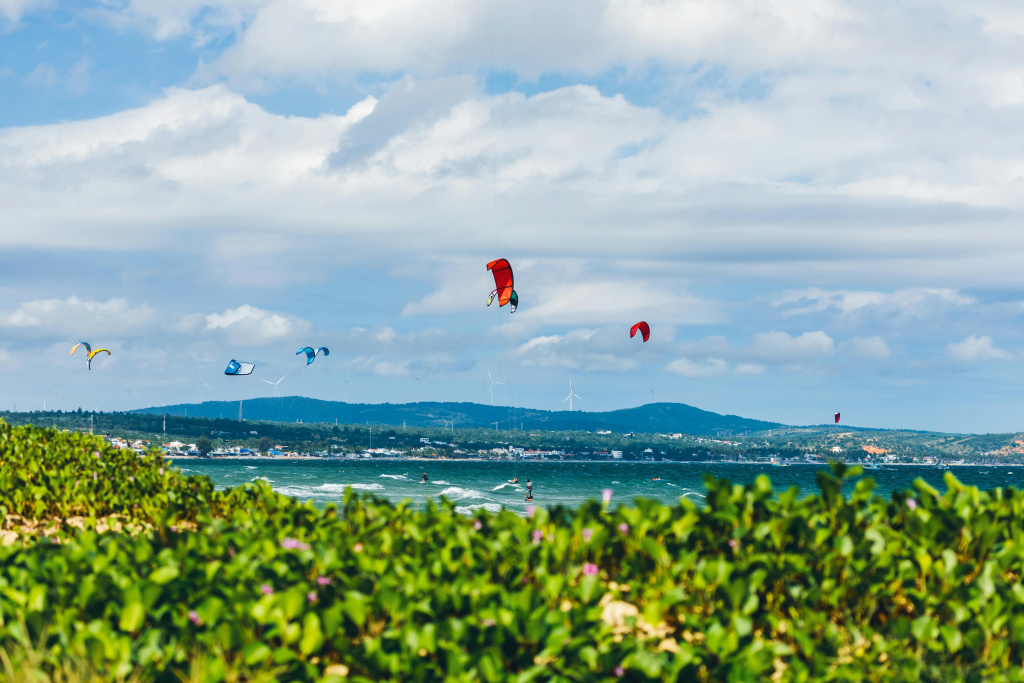
Vietnam has quietly become one of the world's most reliable kitesurfing destinations, and Mui Ne sits at the centre of it. A fishing town turned resort strip on the south-east coast, it earned its reputation the honest way: through six months of dependable wind, wide sandy beaches and an infrastructure built around riders. Here is what makes it work, and what a season there actually looks like.
Why Mui Ne works
The wind season
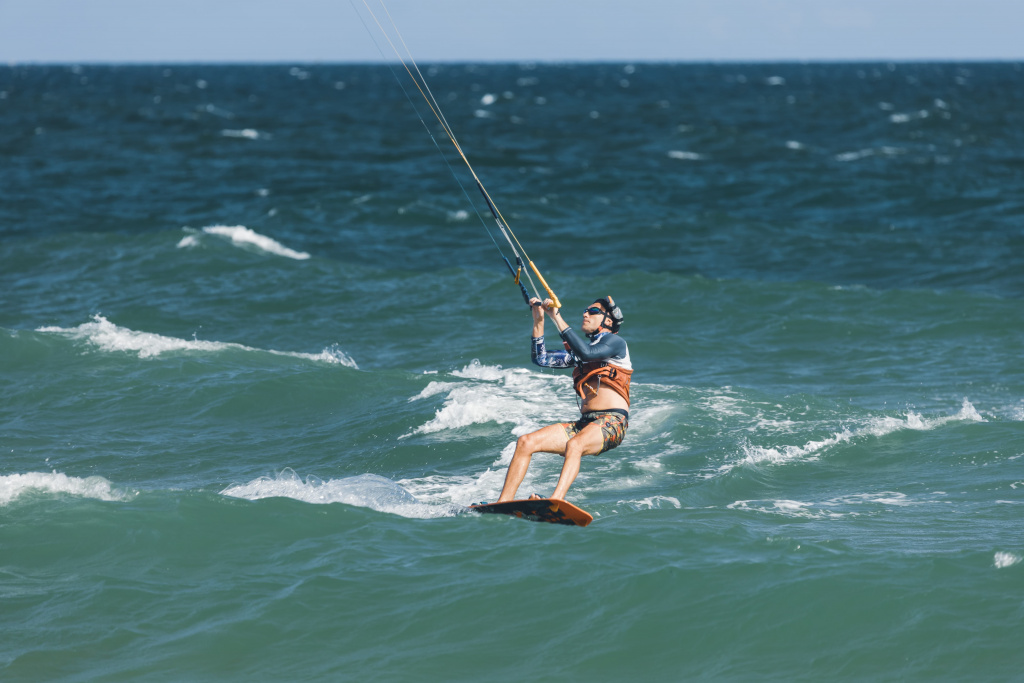
The north-east monsoon runs from November through April, and it is the reason Mui Ne exists as a kite destination. Through the core months — December to March — the wind blows on most days, typically in the 12–25 knot range, occasionally more. That is a genuinely useful spread: strong enough for a 9 m to be fun, gentle enough that a lesson on a 12 m is not a fight.
The pattern is thermally reinforced, so the wind usually fills in through the late morning and holds into the afternoon. You can plan a day around it, which is more than can be said for a lot of European spots. If you want to read the forecast yourself before booking, our guide on how to read a wind forecast covers Windguru and Windy.
The beach and the water
Mui Ne's main kite beach is long, sandy and wide at low tide — plenty of room to lay out a kite without crowding your neighbour. The bay takes the edge off the swell, so the water inside is choppy rather than genuinely wavy: ideal for learning, and fun enough for freeride once you are riding upwind. Riders chasing waves head a short drive up the coast, where the beach breaks pick up properly.
One practical note: it is a cross-onshore to side-shore wind on the main beach, which is the safe configuration for lessons. Offshore days are rare and schools do not teach on them — for good reason.
The atmosphere
Mui Ne draws riders from everywhere — Russians, Germans, Koreans, Australians, Vietnamese. The strip along the beach is dense with cafés, seafood restaurants and bars, so evenings after a session are easy. It is not a party town in the Thai sense; it is a kite town, which is a different and generally better thing.
Learning to kite in Mui Ne
Mui Ne is one of the best places in the world to learn, mostly because of the sheer number of usable days. Progress in kitesurfing is limited by hours on the water, not by talent — and here you get those hours.
How a course is structured
Theory. Before touching the water you learn the wind window, how to read conditions, the safety systems and how the equipment goes together. Short, but it is the part that keeps you safe later.
Land practice. Flying a trainer kite and then the real kite on the beach, learning to park it, generate power on demand and use the quick release without thinking about it.
Body dragging. In the water with the kite but no board — the skill that lets you retrieve your board later, and the one most self-taught riders skip and regret.
Water start and first runs. The moment it clicks. From here you are riding, and the rest is repetition and refinement.
Riding upwind. The real dividing line between a beginner and an independent rider. Until you can go upwind you depend on someone walking you back; after it, you are free.
We follow the IKO level system — Discovery, Intermediate, Independent — which means your certification is recognised at rental centres worldwide.
What it costs
A private hour with an IKO instructor is €55, group lessons (2:1) from €45 per person per hour, and full courses run from €100 (Discovery) to €600 for the complete 15-hour programme to independent riding. Equipment and insurance are included. Budget accommodation runs €15–30 a night and eating locally costs €8–15 a day, which makes a full learning trip meaningfully cheaper than the European equivalent. The detailed breakdown is in how much time and money it takes to learn.
Safety
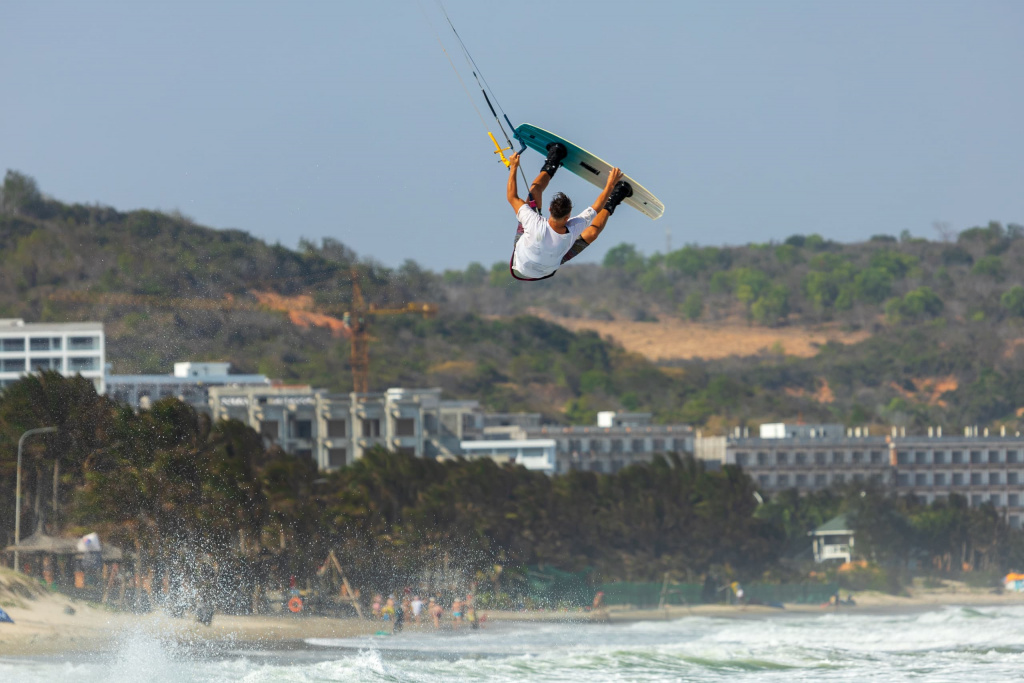
Kitesurfing is a wind sport, and wind is not always polite. Our instructors are IKO certified, students ride with radio helmets, and there is a rescue boat on the water. Equipment is checked between sessions rather than at the end of the season. None of this is remarkable — it is simply the standard a school should meet, and it is worth confirming before you book anywhere.
Why ride with K1
- IKO-certified instructors with years of teaching behind them, not seasonal staff.
- On the beach. The school sits directly on the water — no transfers, no wasted wind.
- Current equipment from Ozone, Flysurfer, F-One and Harlem, included in the price of every lesson.
- Flexible programmes from a single taster hour to the full 15-hour course, adapted to your pace.
- A shop attached to the school — when you are ready to buy, we help you choose and ship worldwide.
Beyond the water
Mui Ne has enough for the no-wind days: the red and white sand dunes, the Fairy Stream, the fishing harbour at dawn, and a coastline of seafood restaurants that justify the trip on their own. Accommodation ranges from €15 guesthouses to proper beachfront resorts — see our accommodation options.
The short version
Six months of reliable wind, warm water, a forgiving bay, low costs and a functioning kite community. If you want to learn to kitesurf properly — or to spend a winter riding rather than waiting for a forecast — Mui Ne is one of the few places that consistently delivers.
Want advice from an instructor?
Our IKO instructors will help you choose gear or plan a kite trip to Mui Ne — free of charge.
Read next
The Boxer covers a span most brands split across three models. Why a 2.8 m exists, what a 16 m does, and how t…
Naish Pivot 2026 Review: Why It Is Named After a TurnThe Pivot is Naish's core model and a wave-riding benchmark. Eight sizes from 6 to 14 m, from 1,225 €. What th…
Naish Brand Review: From Windsurfing to Foils, Half a Century on the WaterNaish began with Robby Naish's windsurfing and today offers the widest foil range in our catalogue. 124 items.…