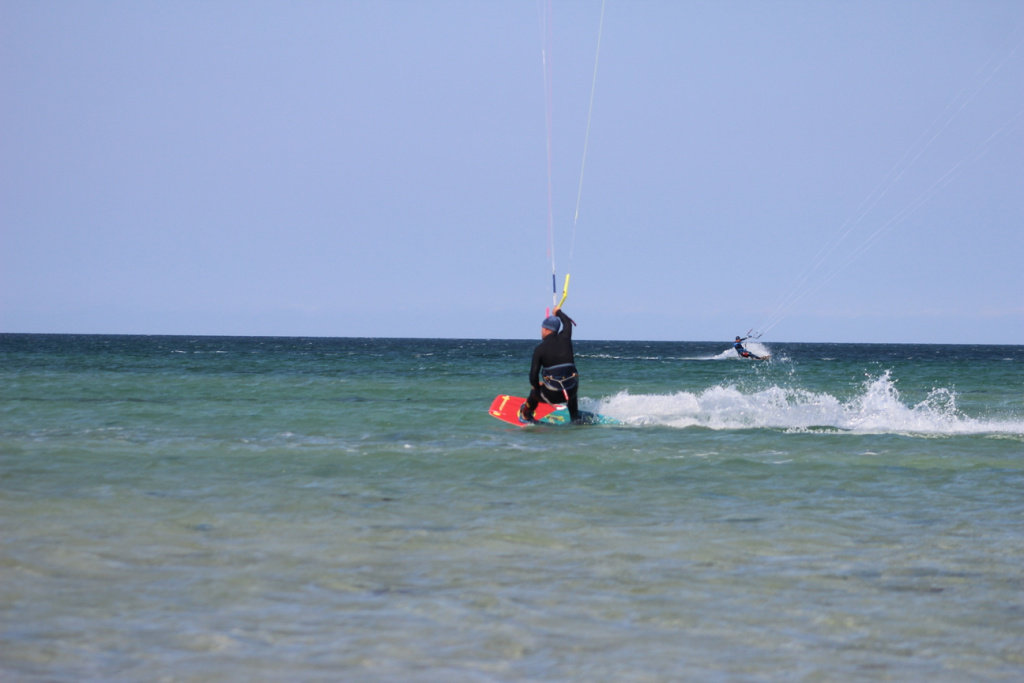
Two people take the same ten hours of lessons. One comes home riding, the other comes home with a story about how the wind never worked. The difference is almost never talent — it is where and when they went.
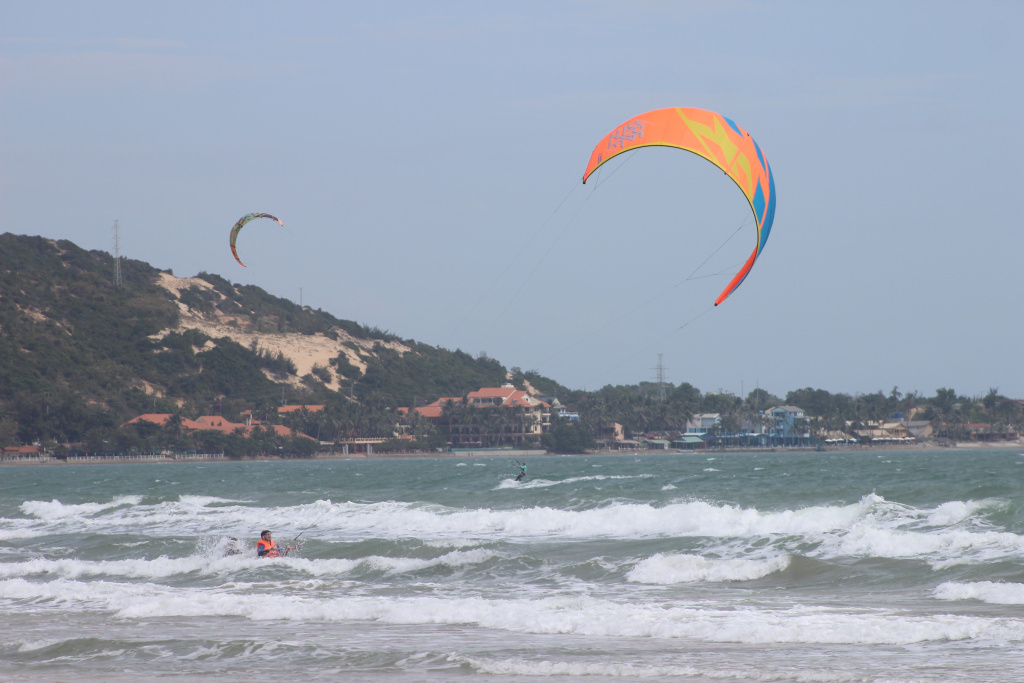
What makes a spot good for learning
Standing depth. Water you can stand up in removes most of the fear and half the difficulty. When the kite drops, you plant your feet instead of treading water.
A sandy bottom. No reef, no rocks, nothing that punishes a fall.
Side-shore or side-onshore wind. Wind along the beach drifts you down the shoreline. Offshore wind takes you out to sea; pure onshore pushes you onto the sand. Ask which one a spot has before you book.
Space. Room downwind matters more than anything for a beginner, who will travel downwind constantly for the first few days.
Consistency. Not maximum wind — number of windy days in a row. A spot that blows 25 knots twice a fortnight is worse for learning than one that blows 15 knots daily.
Where those conditions exist
Mui Ne, Vietnam — sandy, shallow, side-shore, windy almost daily from November to April, and inexpensive. This is our beach, so treat the recommendation accordingly, but the conditions are a matter of fact rather than opinion.
Egypt — the flattest, shallowest lagoons in reach of Europe, and the standard answer for a first trip from there. More expensive, colder in winter than people expect.
Sri Lanka — excellent lagoons, a shorter and sharper season.
Brazil — the most reliable wind on earth and the longest journey to reach it. Worth it for three weeks, not for one.
How to choose the school
Ask these five questions. The answers, and the willingness to answer, tell you everything:
- Is the instructor certified, and by whom? IKO or equivalent. Ask to see the card.
- How many students per instructor? One-to-one is fastest, two-to-one is fine and cheaper, four is a queue with a view.
- Is there radio in the helmet? Being shouted at across the water is not instruction.
- What rescue is available? A boat, a jet ski, or a plan — but something specific.
- Is insurance included, and what does it cover? Standard travel policies exclude kitesurfing.
How long to plan
Most people need 8–15 hours with an instructor to ride independently — four to seven days of one or two hours, depending on wind. Book ten days minimum, two weeks ideally. The wind takes days off, and a week-long trip with three windless days becomes a holiday with one lesson.
Frequently asked questions
Can I learn at home instead of travelling?
Yes, if your local spot is shallow, sandy and reliably windy. Most are not, which is why kite travel exists.
Is it cheaper to learn in a group?
Per hour, yes. Per skill acquired, usually not — you get less water time each. Two people at a similar level is a reasonable compromise.
Do I need to be fit?
No. The kite pulls, you steer. Patience matters more than strength, and the harness takes the load rather than your arms.
What if the wind does not blow during my course?
A good school moves unused hours rather than burning them, and has something else to do with the day. Ask about that policy before you pay, not after.
Our courses, levels and prices are on the kitesurfing lessons page, and the full picture of the destination is in the Mui Ne guide.
Want advice from an instructor?
Our IKO instructors will help you choose gear or plan a kite trip to Mui Ne — free of charge.
Read next
Starboard came out of windsurfing and became the leading name in SUP. The range: inflatable and hard boards, p…
Inflatable SUP vs Hard Board: What to Choose and the Real DifferenceAn inflatable fits in a boot; a hard board goes faster. Eight differences you feel on the water, and when payi…
How to Read a SUP Board Size: 10'8" x 33", Litres and What MattersThree numbers — length, width and volume — decide whether you paddle or fall. What each one means and how to m…