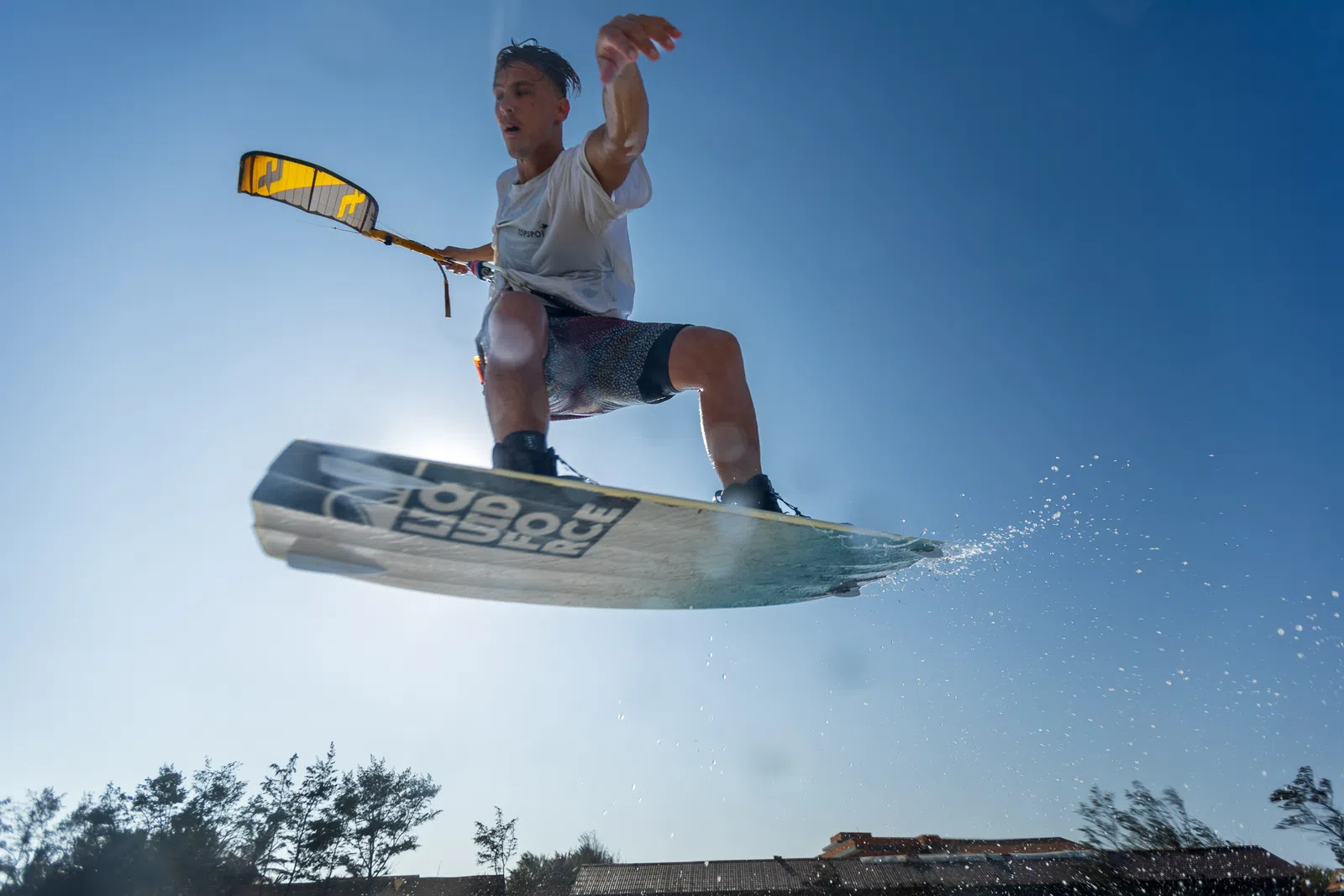
There is a stage in kitesurfing where the mechanics are there and the riding is not. You can fly the kite, you can body drag, you get up on the board — and every session still feels like something you are surviving rather than doing.
That gap is almost never technical. It is confidence, and confidence responds to specific actions rather than encouragement.
Fix the kite, not the board
The single most common cause of tension is that kite control is not automatic yet. If part of your attention is still on where the kite is, there is nothing left for the board, and the body knows it.
Go back to the boring drills. Fly the kite one-handed. Fly it with your eyes on the horizon instead of the canopy. Park it at 45 degrees and hold it there while walking down the beach. Fifteen minutes of this per session does more for your riding than an hour of failed water starts.
Go smaller
Riders learning in overpowered conditions learn fear along with technique. A kite that is one size too big teaches you that the sport is about hanging on.
Take the smaller kite. You will ride slower, work harder and progress faster, because you will be steering rather than resisting.
Know your exits
Anxiety on the water is usually the mind noticing that it does not have a plan. Give it one:
- Where is your safety release, and can you find it without looking? Test it every session.
- What is downwind of you if everything fails?
- Can you self-rescue from where you are — and have you actually practised it, or only heard about it?
People who know they can get themselves home ride visibly more relaxed. This is not psychology, it is arithmetic.
Practise one thing per session
Going out to "get better" produces vague sessions. Going out to ride upwind for one specific stretch, or to do five controlled stops, produces measurable ones — and measurable progress is what confidence is built from.
Ride with people better than you
Not to compare, but to calibrate. Half of a beginner's fear is not knowing what normal looks like. Watching someone competent handle a gust shows you that the gust was ordinary.
Learn the difference between nerves and a warning
This matters more than any of the above. Nerves feel like tension about your own skill. A warning feels like something specific about the conditions — a dark line upwind, the beach emptying, wind that has shifted direction since you launched.
Ignore the first, obey the second. Riders who cannot tell them apart either stop progressing or get hurt.
Frequently asked questions
I can water start but I keep going downwind. Normal?
Completely. Riding upwind is a separate skill that comes after the water start, usually between hours ten and fifteen. Everyone walks up the beach first.
Should I take more lessons or just practise?
If you are repeating the same mistake, take a lesson — practice cements errors as readily as it cements technique. If you are making new mistakes, practise.
How do I stop panicking when the kite crashes?
Crash it on purpose, in shallow water, with an instructor. Doing something deliberately twenty times removes the fear far faster than avoiding it.
Is it normal to be scared after a bad session?
Yes, and it usually passes in one or two calm sessions on a smaller kite. If it does not, go back to an instructor for an hour rather than pushing through alone.
Our courses take riders through exactly this stage — see kitesurfing lessons in Mui Ne. A single refresher hour with an instructor is often all a stuck rider needs.
Want advice from an instructor?
Our IKO instructors will help you choose gear or plan a kite trip to Mui Ne — free of charge.
Read next
Starboard came out of windsurfing and became the leading name in SUP. The range: inflatable and hard boards, p…
Inflatable SUP vs Hard Board: What to Choose and the Real DifferenceAn inflatable fits in a boot; a hard board goes faster. Eight differences you feel on the water, and when payi…
How to Read a SUP Board Size: 10'8" x 33", Litres and What MattersThree numbers — length, width and volume — decide whether you paddle or fall. What each one means and how to m…