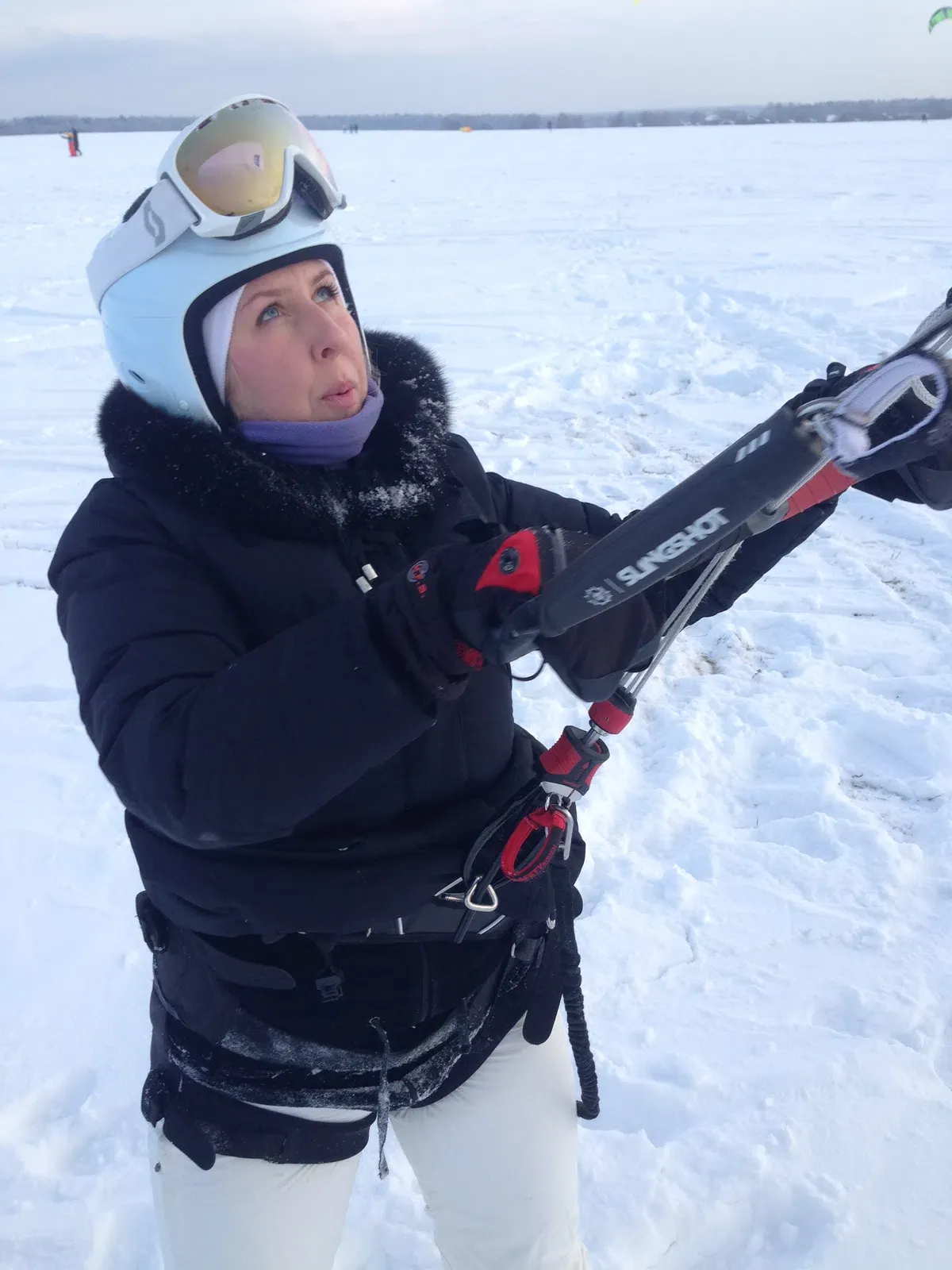
The first session of the winter is where most snowkite problems happen: gear that sat in a garage since spring, clothing chosen optimistically, and ice nobody checked. None of it is complicated to prevent.
The kite, before the snow
Take everything out at home, not on the lake in a headwind.
- Lines: check for wear at the pigtails, and measure them against each other. Lines stretch unevenly over a season and a kite that flies badly is often just out of trim.
- Bar and safety systems: release the quick release, reassemble it, do it again. Cold and gloves make everything harder — you want that movement to be automatic.
- Bridles and canopy: look for abrasion. Snow and ice are more abrasive than water.
- Foil kites: check the internal ribs and that the cells inflate evenly; a kite stored damp does not improve over the summer.
Clothing, which matters more than the kite
The working range for snowkiting is about −6 to −15 °C, and wind chill on top of that. Layers, not one thick jacket: a base that moves moisture, an insulating middle, a hard shell against the wind.
Spare gloves are not a luxury. Wet gloves at −15 °C end your session in fifteen minutes, and there is no drying them out there.
Goggles rather than sunglasses. A face covering. A helmet — the surface is hard, and unlike water it does not absorb anything.
Ice
The rule is simple and absolute: if you do not know the ice, do not ride on it. Ask locals, and specifically about currents, inflows and springs — these thin the ice invisibly from below. Early and late season are the dangerous windows.
Ride with someone. Carry ice picks in the north, where riding on frozen lakes and sea ice is normal practice.
What differs from riding on water
- You cannot swim out of a mistake. Self-rescue on snow means walking, which means knowing how far you are from the car.
- Downwind matters even more — trees, rocks, fences and power lines do not move, and on skis you carry speed further than you think.
- Cold shortens judgement. After two hours you make worse decisions and notice it later. Set a time limit before you start.
- Carry the hook knife. Same as on water, same reason.
The first session
Go smaller than you think on kite size and shorter than you think on time. Snow gives more glide than water, so the same kite in the same wind feels more powerful under your feet.
Details of our winter trips are on the snowkiting page (Russian). If you have never kited on snow but ride on water, one lesson is usually all it takes to convert — ask us.
Want advice from an instructor?
Our IKO instructors will help you choose gear or plan a kite trip to Mui Ne — free of charge.
Read next
Starboard came out of windsurfing and became the leading name in SUP. The range: inflatable and hard boards, p…
Inflatable SUP vs Hard Board: What to Choose and the Real DifferenceAn inflatable fits in a boot; a hard board goes faster. Eight differences you feel on the water, and when payi…
How to Read a SUP Board Size: 10'8" x 33", Litres and What MattersThree numbers — length, width and volume — decide whether you paddle or fall. What each one means and how to m…