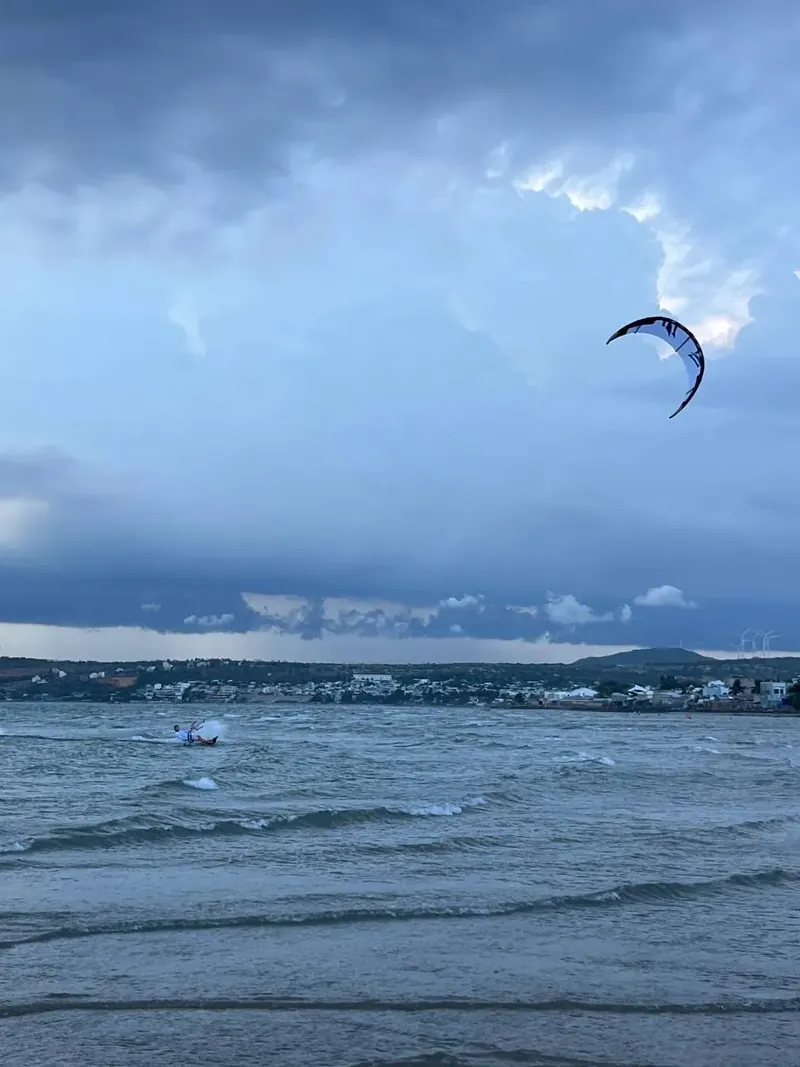
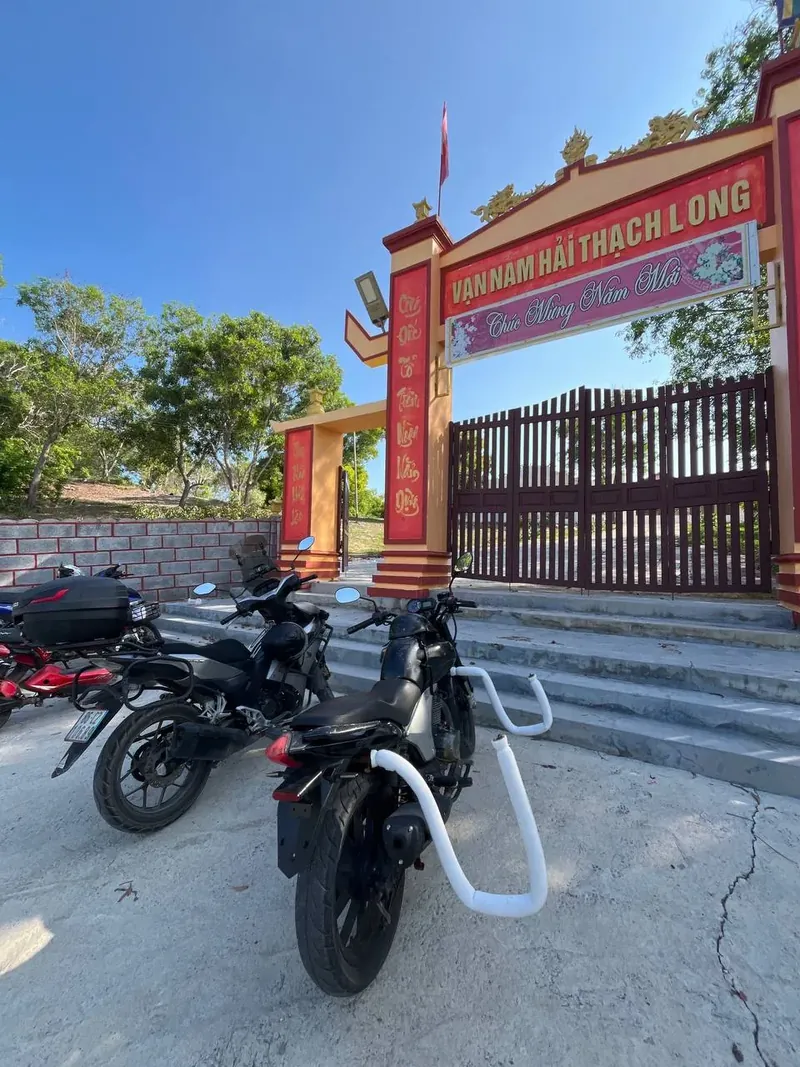
In summer the main Mui Ne wind disappears and the "classic" spots on the central beach barely work. But locals have a reliable summer option — the cape on the south-western side of the bay, which we simply call the Cape. The landmark is the gate of the whale temple Lăng Nam Hải Thạch Long, and on Windy the spot is listed as "Sóng vỗ Cá voi" — "whale waves". Here's the local school's take: where it is, what the wind does, why the tide matters so much here, and how to get there.
Why "whale cape"
Next to the spot stands the fishermen's temple Lăng Nam Hải Thạch Long — a shrine of the whale cult (Cá Ông, "lord of the South Sea"). By local tradition the whale is honoured as the protector of fishermen, and its bones are kept in temples like this one. That's where the whale names come from, both for the temple and for the spot on wind maps.
The spot at a glance
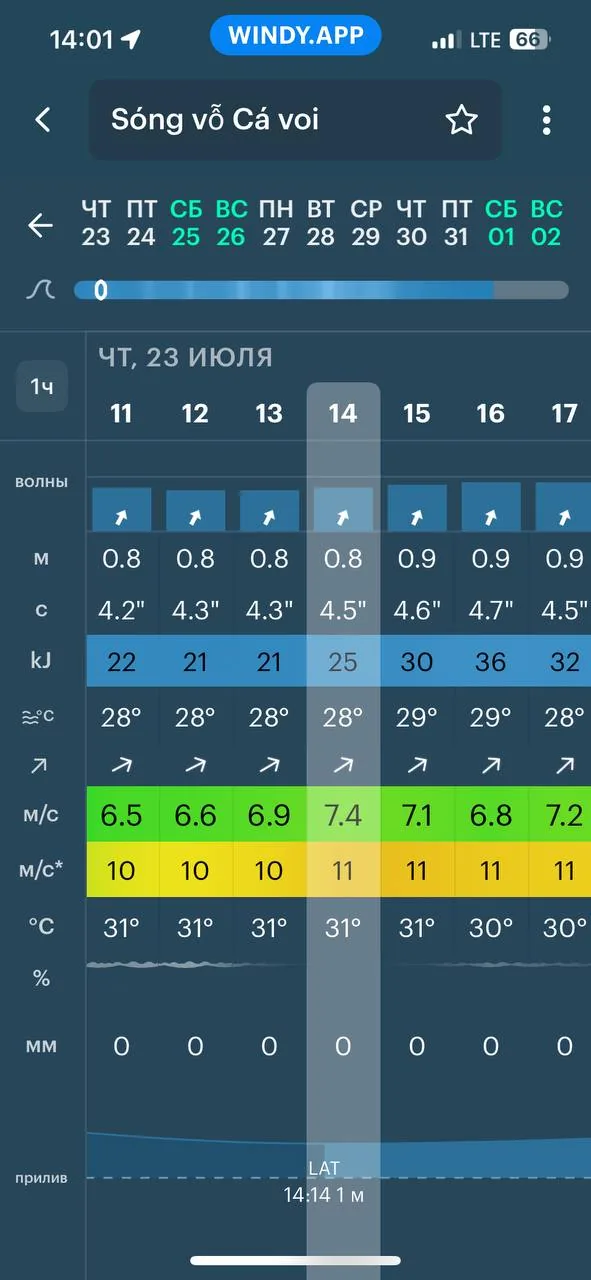
- Wind: WSW, 13–15 knots with gusts to about 20, onshore
- Water: 28 °C, clean, warm all season
- Bottom: sand, even, no reef
- Tides: important — they change the spot completely
Wind: when and what
This is a summer spot: it works during the south-west monsoon season, when the central beach is flat. The wind comes from the south-west (WSW) and blows onshore. On a typical day it's around 13–15 knots gusting to roughly 20, and it's steadier during the middle of the day.
An important local detail: for the first 50–100 metres off the beach there's a wind shadow — the wind is broken and weaker because of buildings, palms and boats. Further out it's smoother and denser. In certain directions the cape actually blows harder than the central beach.
Because of that shadow, be careful with your launch: start from an open patch and don't work right at the water's edge.
Water, bottom and tides — read this carefully
The water is warm (~28 °C) and clean. The bottom is sand and even. The one caveat: right by the shore, near the fishing boats, you can occasionally smell fuel and find the odd piece of plastic — but that's the exception rather than the rule.
The thing that really matters here is the tide, because it genuinely changes the riding:
Low tide, water below 1.2 m. A wide beach, shallow and flat — comfortable for beginners and advanced riders alike. The ideal window for lessons and progression.
High tide, water from 2.3 m. The beach narrows, it's deeper and launching is harder — especially if you're not tall. Since the wind is onshore, at full water it pushes you towards the beach, so you need confident upwind riding.
Practical takeaway: plan your session around low water. Check the tide table along with the forecast before you drive out.
Who the spot suits
At low tide — everyone, including people taking their first lessons: shallow, flat and safe. At high tide it's better for riders who can already hold upwind confidently, because onshore wind plus a narrow beach leaves less room for error.
Frequently asked questions
When does the Cape spot work?
It's a summer spot, working during the south-west monsoon — roughly the period when the central Mui Ne beach has no wind. Typical conditions are WSW at 13–15 knots, gusting to about 20.
Is it suitable for beginners?
At low tide, yes — the beach is wide, the water shallow and flat, and the bottom is sand with no reef. At high tide the beach narrows and the onshore wind pushes towards shore, so it suits riders who can already go upwind.
Why does the tide matter so much here?
Because the spot changes character. Below about 1.2 m you get a wide, shallow, flat playground. From about 2.3 m the beach is narrow and it's deep close in, which makes launching and landing harder.
Is there a wind shadow near the beach?
Yes — the first 50–100 metres are broken and weaker because of buildings, palms and boats. Launch from an open area and get out past the shadow, where the wind is smoother and stronger.
How do I find the spot?
Navigate to the whale temple Lăng Nam Hải Thạch Long on the south-western side of the bay. On Windy the spot appears as "Sóng vỗ Cá voi".
Riding in Mui Ne in summer and want a local to point you at the right spot on the day? Message the K1 instructors — we check the wind and tide every morning. Live conditions are on our wind and webcam page.
Want advice from an instructor?
Our IKO instructors will help you choose gear or plan a kite trip to Mui Ne — free of charge.
Read next
The Boxer covers a span most brands split across three models. Why a 2.8 m exists, what a 16 m does, and how t…
Naish Pivot 2026 Review: Why It Is Named After a TurnThe Pivot is Naish's core model and a wave-riding benchmark. Eight sizes from 6 to 14 m, from 1,225 €. What th…
Naish Brand Review: From Windsurfing to Foils, Half a Century on the WaterNaish began with Robby Naish's windsurfing and today offers the widest foil range in our catalogue. 124 items.…