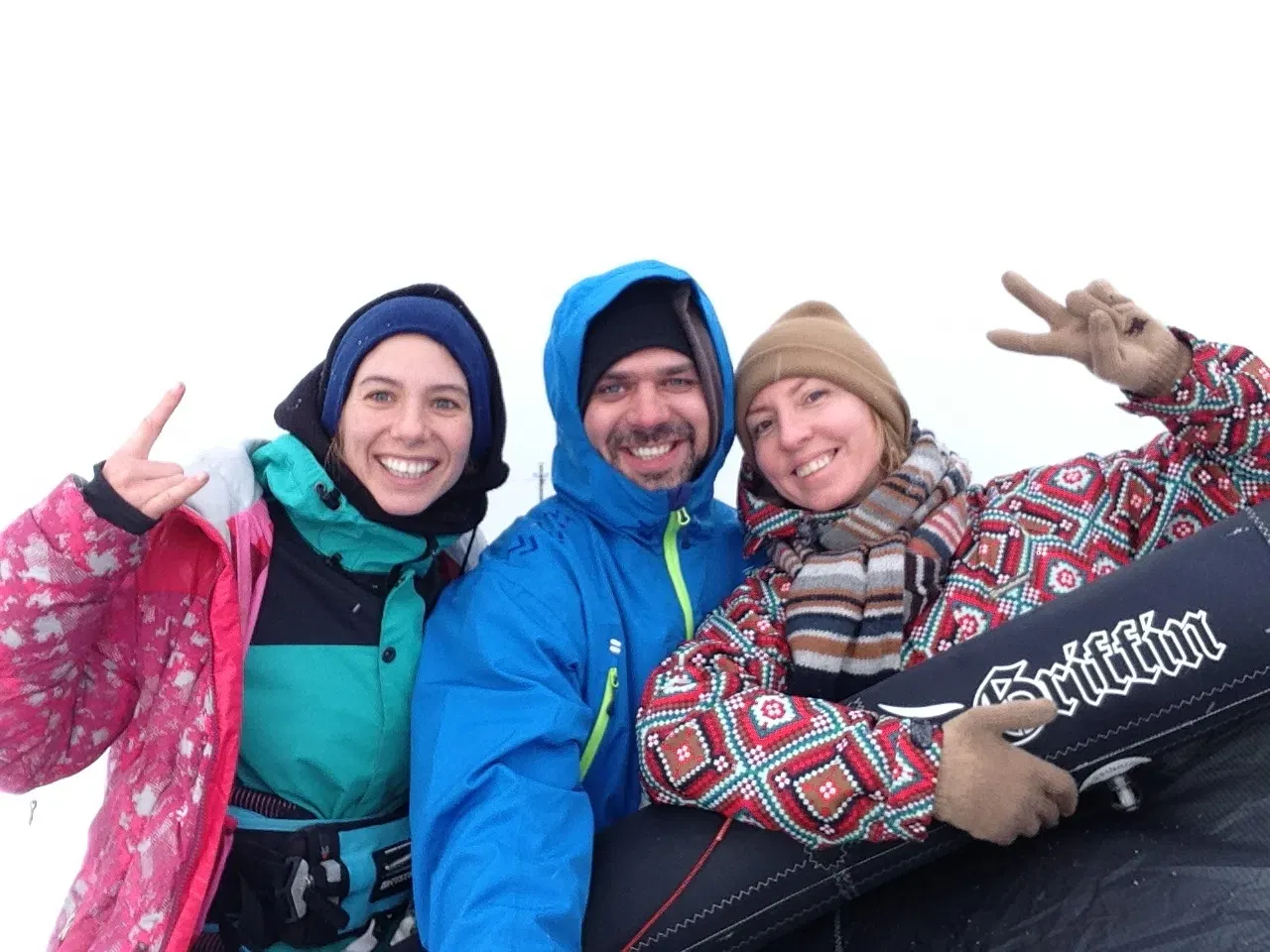
A kite camp in the tundra is not a resort holiday. There is no lift queue, no après-ski and frequently no phone signal. What there is: a white plain the size of a county, wind you can rely on, and a small group of people who all wanted the same thing.
What a day looks like
Late breakfast, because in midwinter the light comes late. Then a drive to whichever spot the wind suits that day — a frozen lake, a valley, or the open tundra by the sea. Riding for as long as the light and the cold allow, which in January is a few hours and in March is most of the day.
Then back to a warm room, drying gloves on a radiator and the sort of conversation that only happens after everyone has been cold together.
Why people come back
Space. The single thing that makes northern riding different is distance. You can ride in a straight line for kilometres and not meet anyone. Nothing at a crowded summer spot feels like that.
Reliability. The wind statistics in the north are good, and unlike the mountains the flow is clean rather than gusty.
The sky. In winter the aurora is a regular event rather than a rumour. Nobody comes only for that, and nobody leaves unaffected by it.
Who it suits
You do not need to be an expert kiter, but you do need to be comfortable with cold and with a day that does not follow a schedule. Snowkiting itself is quick to learn — most people who ski or ride are moving within a day.
Who it does not suit: anyone who needs comfort, a spa and a guaranteed programme. Weather runs the week, not the itinerary.
What is included and what you bring
We provide kites, safety equipment, transport between spots and guiding — including, importantly, knowing which ice is safe. You bring skis or a snowboard, your own clothing and a helmet that fits.
Clothing is where people underestimate the trip. Layers, spare gloves, goggles, a face covering. Everything else can be improvised; that cannot.
When to come
February and March are the sweet spot: cold enough for good snow, light enough for full days. January is darker and more atmospheric, with riding in a long blue twilight. April brings a melt-freeze crust that is fast and unforgiving.
Dates and what is included are on the tundra kite tour page (Russian). Joining from abroad takes some planning — write to us early and we will walk you through it honestly.
Want advice from an instructor?
Our IKO instructors will help you choose gear or plan a kite trip to Mui Ne — free of charge.
Read next
Starboard came out of windsurfing and became the leading name in SUP. The range: inflatable and hard boards, p…
Inflatable SUP vs Hard Board: What to Choose and the Real DifferenceAn inflatable fits in a boot; a hard board goes faster. Eight differences you feel on the water, and when payi…
How to Read a SUP Board Size: 10'8" x 33", Litres and What MattersThree numbers — length, width and volume — decide whether you paddle or fall. What each one means and how to m…