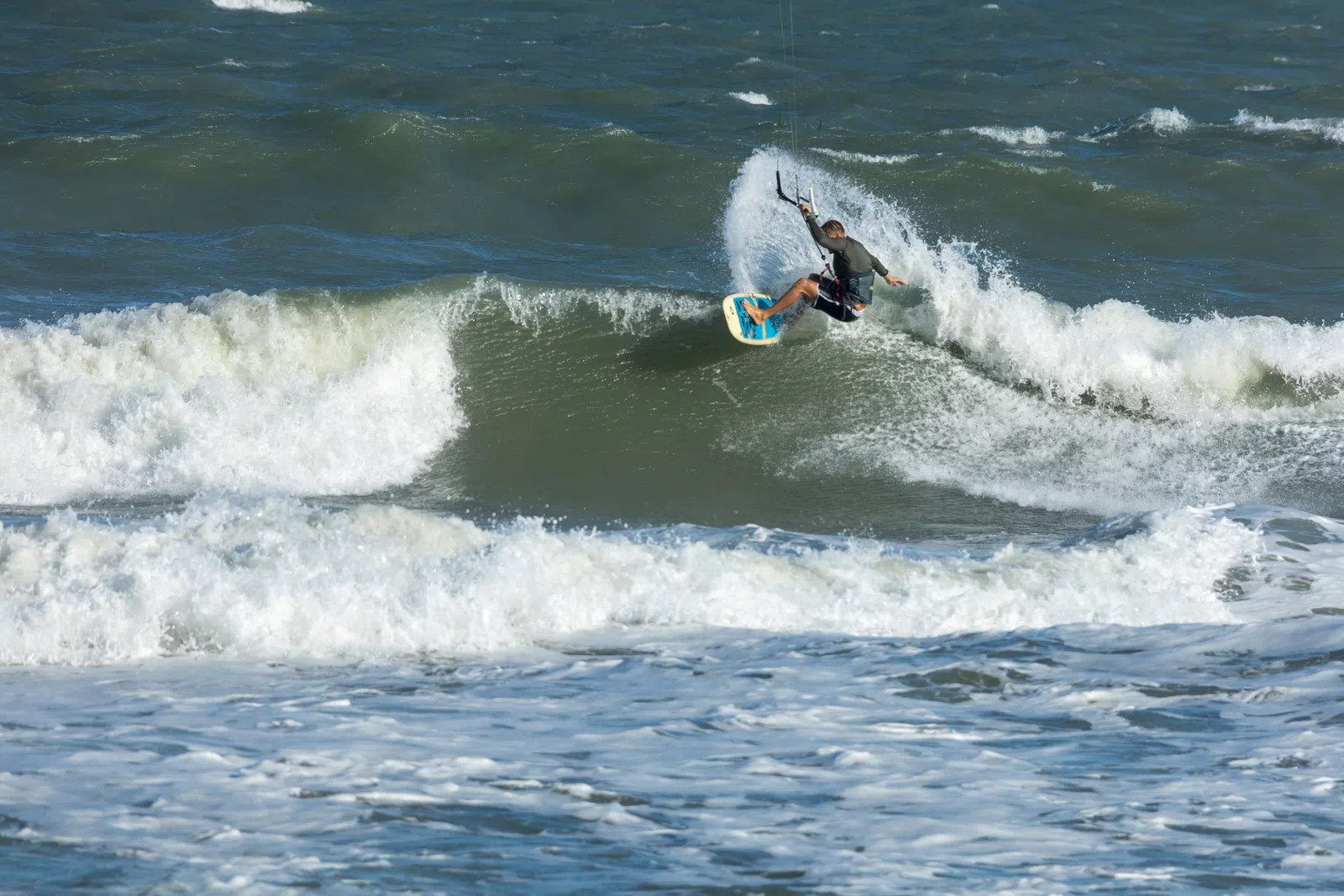
First time in Mui Ne, never stood on a board or flown a kite, and you want to try. The question we hear most at the station: kite or surf — which one first? It does not come down to which is "easier". It comes down to how many days you have, what the sea is doing, and what you want out of your first week.
The short answer
- Surfing pays off on day one: you stand up in the white water and ride to the beach. Catching green waves on your own takes weeks.
- Kitesurfing starts slower — the first hours are about flying the kite, and the board comes later. But after 8–12 hours of lessons many students ride independently, both directions.
- In Mui Ne you do not have to choose. Mornings are for surfing while the water is smooth; the wind usually builds by lunchtime, which is kite time.
What the first lesson looks like
Surf: twenty minutes on the sand — lying on the board, paddling, the pop-up. Then waist-deep water and broken white-water waves. The instructor pushes you into a wave at the right moment, you stand, you ride. Most beginners ride their first metres standing within the first hour, on a long soft-top board that is stable and forgiving.
Kite: the first hour is about the kite itself — the wind window, where the power is and how to kill it. You fly a trainer kite on the beach, then a full-size kite standing in the water, with a radio in your helmet. The board comes once you can steer the kite confidently with one hand. In IKO terms, that is Discovery and Intermediate: piloting, body-dragging and the water start.
How long until you ride on your own
| Surf | Kite | |
|---|---|---|
| First "I'm riding" moment | 1–2 lessons, in white water | 4–6 hours, first water starts |
| Riding independently | weeks of practice to catch unbroken waves | 8–12 hours for most people |
| Depends on | whether there are waves on your days | whether there is wind, and how many hours you book in a row |
Staying for the whole season rather than a week? See the 2026/27 season early booking: courses and gear storage 5% off when booked with a deposit by 30 October. Rental is not included.
How to decide
Three or four days? Take surf, or a kite trial hour. Surf gives you a complete "I rode" experience in that time; kite you will taste, but probably not ride solo.
A week or more? Kitesurfing becomes a realistic goal — eight to twelve hours fit into a week if the wind blows every other day.
Surf needs waves, kite needs wind, and neither shows up every day. That is why we do not fix a schedule in advance: we check the forecast and the spot webcam and put kite on windy days and surf on wave days.
Is it scary, is it safe?
White-water surfing on a soft-top is about as gentle as water sports get: waist-deep water, a sandy bottom with no rocks or reef. Kitesurfing deserves respect for the wind — a kite pulls hard — so you start on a trainer kite, wear a helmet, vest and radio, and practise the quick-release on day one. You do not need strength: the pull goes into the harness, not your arms.
What it costs to start
| Format | Surf | Kite |
|---|---|---|
| Trial, 1 hour private | €50 | €55 |
| Short course | 3+2 — €100 | Discovery — €100 |
| Course to independence | 9 hours + unlimited rental — €300 | 8+1 hours — €400, full course — €600 |
Equipment and gear insurance are included. Current prices: surfing lessons and kitesurfing lessons.
Our advice
Not sure? Surf the first morning with waves — it takes away the fear of the water and the board. Book a kite trial hour on the first windy afternoon; the trial fee counts towards a course if you continue. By the end of the week you will know which sport is yours, from experience rather than advice.
FAQ
Can I do both on one trip?
Yes — surf in the morning, kite in the afternoon. Just avoid doubling up on your first days; unfamiliar muscles get tired.
Does surfing help with kiting later?
Board balance and reading the water carry over. Flying the kite you still learn from scratch.
Do I need to be able to swim?
Yes, confidently. A vest is mandatory in lessons, but it does not replace swimming.
Want advice from an instructor?
Our IKO instructors will help you choose gear or plan a kite trip to Mui Ne — free of charge.
Read next
The cheapest SUP in our catalogue costs 99 euros, the cheapest adult one 199. Where that price comes from, wha…
GONG I-SUP: Nine Models for Nine JobsAllround, Cruising, Race, Family, Explorer, Adventure, Hybrid, Longboard, Shortboard — a range split by purpos…
Assembling a Setup Without Forgetting Anything: Five ChecklistsIn modular ranges half the parts are sold separately, and it is easy to reach the water without a pad or a lea…