Choosing a foil board is mostly an argument about volume. Too little and you sink while waiting for wind; too much and the board fights you in the air, turns badly and lands hard. F-One's shapers spend most of their development time on exactly that balance, and their boards tend to be narrower, thinner and more compact than the market average for the same volume.
Here is how to choose without guessing.
The three numbers that matter
Volume decides flotation. The rule of thumb: for wingfoiling, a beginner wants volume roughly equal to body weight in litres plus 20–30. A 75 kg rider starts comfortably around 95–105 litres. Experienced riders go far below body weight, down to sinker boards you water-start from.
Length decides how easily you get going and how the board handles touchdowns. Longer boards plane and pump up onto the foil more easily; shorter ones are freer in the air and less likely to catch a rail.
Width decides stability at low speed — critical when you are kneeling on a board in light wind, irrelevant once you are flying.
Choose by discipline
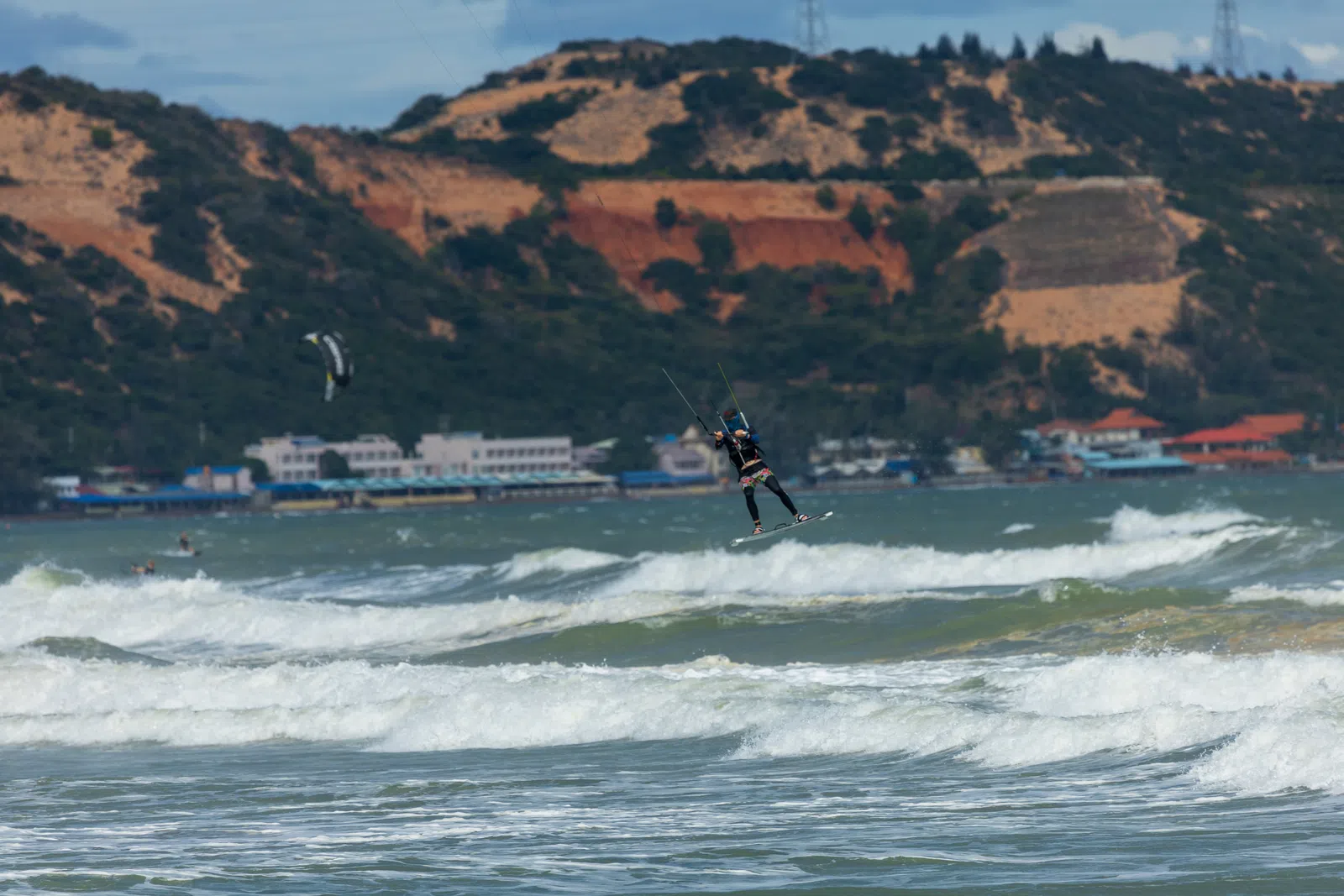
Kite foiling
You need less volume than for winging, because the kite lifts you and you do not stand still waiting for wind. Compact boards work well and are easier to travel with.
Wingfoiling
Volume matters most here, because you spend the first sessions kneeling or standing still while sorting the wing. This is where beginners should be generous with litres and then downsize after a season.
Surf and downwind foiling
Longer, narrower boards that paddle efficiently. A downwind board is a different animal — it has to be paddled onto the bump before the foil does anything.
Match the board to your level, not your ambition
The most common mistake is buying the board you want to ride in two years. A board with too little volume does not make you learn faster; it makes every session start with twenty minutes of failure. Downsizing later is easy and boards hold their value.
Construction
Foiling puts loads on a board that ordinary boards never see: the mast lever pulls on the track box, and touchdowns at speed hit the hull hard. Modern F-One boards focus on stiffness and reinforcement around the track precisely because riders now jump and land on foils.
If you buy used, check the track box area first — that is where a tired board shows its age.
Frequently asked questions
What volume do I need for wingfoiling?
Body weight in kilograms plus 20–30 litres to start. Confident riders drop to around body weight; experts go well below it.
Can I use one board for kite and wing?
Yes, and many people do. Choose the volume for winging — the higher figure — and accept a slightly bigger board for kiting.
Does board size matter more than foil size?
For getting started, the foil matters more: a big, slow front wing lifts early and forgives. The board matters most for the moments before you fly.
Should I learn on my own gear?
Ideally not at first. Rent or take a lesson on school gear for the first few sessions — your requirements will change once you know what flying actually feels like.
We are an F-One dealer and stock the range — see the catalogue. Not sure which volume suits you? Tell us your weight, wind and discipline and we will size it honestly: write to us. Learning from scratch is faster with an instructor — see wingfoil lessons.
Want advice from an instructor?
Our IKO instructors will help you choose gear or plan a kite trip to Mui Ne — free of charge.
Read next
Starboard came out of windsurfing and became the leading name in SUP. The range: inflatable and hard boards, p…
Inflatable SUP vs Hard Board: What to Choose and the Real DifferenceAn inflatable fits in a boot; a hard board goes faster. Eight differences you feel on the water, and when payi…
How to Read a SUP Board Size: 10'8" x 33", Litres and What MattersThree numbers — length, width and volume — decide whether you paddle or fall. What each one means and how to m…